
High School Graduation Heat Map
High school graduation rates reflect the share of students who earn a standard diploma within four years of entering ninth grade and serve as a foundational indicator of college and career readiness. In Florida, graduation rates have trended upward over time, even as they experienced temporary fluctuations during the pandemic when statewide assessment requirements were relaxed. In recent years, rates have not only rebounded but reached a historic high, underscoring Florida’s continued progress in supporting students to complete high school and transition to postsecondary opportunities.

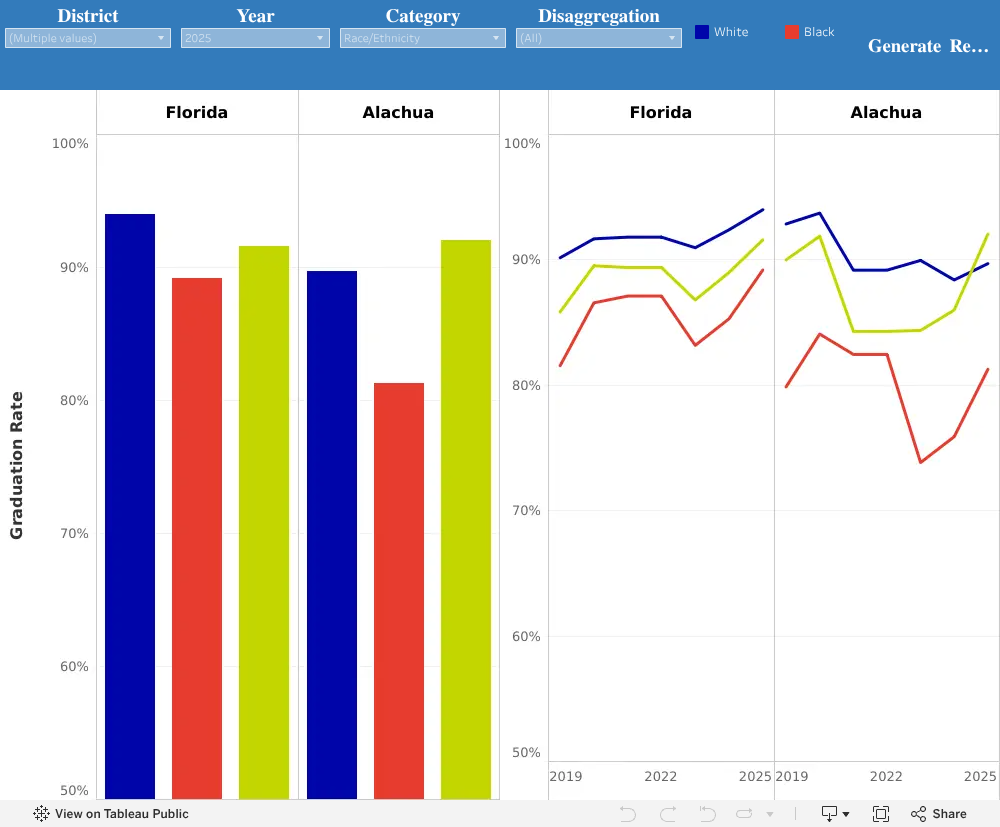
High School Graduation Rates (Demographics)
Because high school graduation is a strong predictor of postsecondary enrollment and success, examining outcomes across student demographics is essential to understanding opportunity in education. Disaggregating graduation rates by race/ethnicity, sex, and economic status highlights differences in student outcomes, helping to identify where progress is being made and where gaps persist. These insights support more targeted strategies to ensure all students are on a path to successful high school completion and postsecondary attainment.
High School Graduation Pathways
Earning a high school diploma is a critical milestone that prepares students for postsecondary education and expands access to economic opportunity. In Florida, students can meet graduation requirements through multiple pathways, including completing standard coursework and assessments, demonstrating college readiness through concordant or comparative exam scores, or pursuing alternative options such as career and technical education or specialized diploma programs. Examining graduation outcomes by pathway provides a deeper understanding of how students are meeting requirements for graduation and how these different routes support readiness for college and careers.

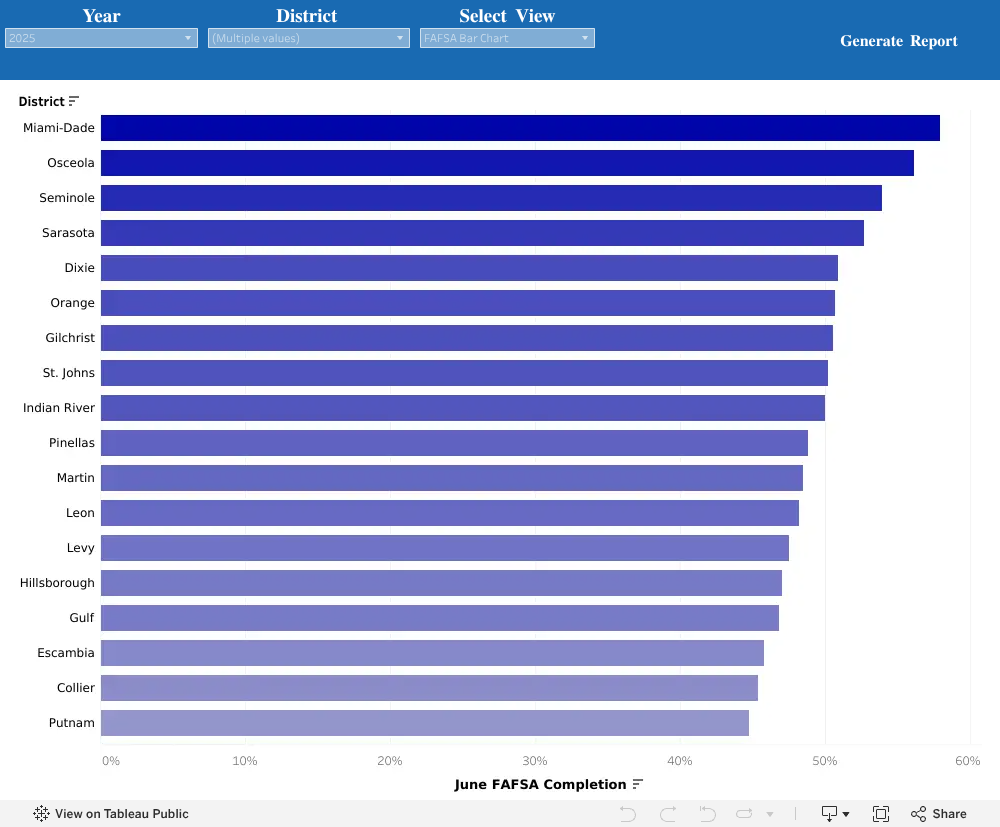
FAFSA Completion Rates
Completing the Free Application for Federal Student Aid (FAFSA) is a critical step in expanding access to postsecondary education. The FAFSA determines a student’s eligibility for federal, state, and institutional financial aid, helping to address one of the most commonly cited barriers to college enrollment: affordability. Research consistently shows that FAFSA completion is strongly associated with postsecondary enrollment, which in turn increases the likelihood of earning a credential and realizing long-term economic and social benefits. In 2025, Florida strengthened its commitment to postsecondary access by embedding FAFSA education into the state’s high school financial literacy curriculum through HB 1255, ensuring students receive accurate information so they can access all eligible aid.