

Educational Attainment
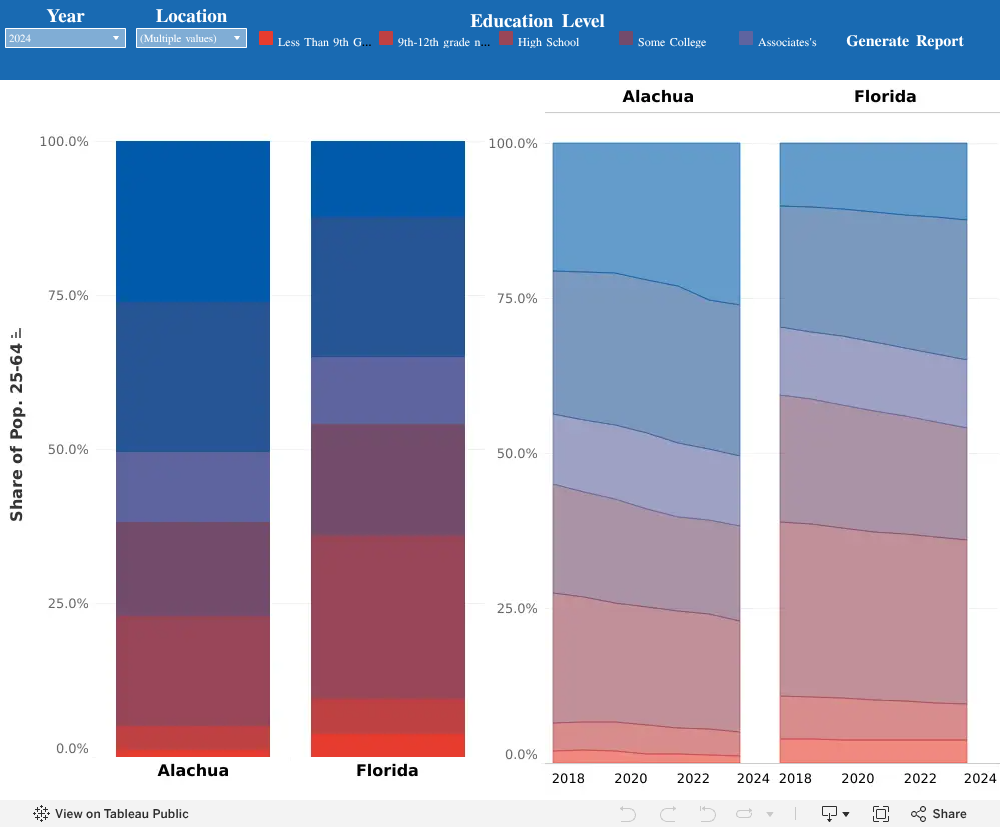
Educational attainment measures the highest level of education completed by the working-age population (ages 25–64) of a region. It is closely tied to economic opportunity, workforce supply, and overall quality of life, as higher levels of education are consistently associated with stronger earnings potential and greater economic mobility.
Wages by Education
Postsecondary attainment is closely linked to economic outcomes, with median earnings increasing with higher levels of education. This relationship highlights the value of continued education beyond high school. In Florida, individuals with a bachelor’s degree earn substantially more than those whose highest level of education is a high school diploma, reflecting a significant earnings premium associated with postsecondary attainment.

Postsecondary Attainment
Postsecondary attainment reflects the share of the working-age population (ages 25–64) that has earned a degree or high-value career credential, providing a key indicator of a region’s long-term educational and economic capacity. Florida’s SAIL to 60 goal sets a statewide target for 60% of working-age adults to hold a postsecondary credential by 2030, underscoring the importance of expanding access to and completion of education and training beyond high school.

GDP per Capita
Gross Domestic Product (GDP) per capita measures the total economic output of a region divided by its population, providing a per-person estimate of economic productivity. It is often used as a broad indicator of regional economic performance and can serve as a proxy for how effectively human capital is being deployed within an economy. GDP per capita provides an important outcome-level indicator of how education, workforce development, and economic growth are interconnected across the state.
