High School Graduation Heatmap
High school graduation rates represent the percentage of students who earn a standard diploma within four years of entering ninth grade. For the 2023-24 school year, the graduation rate reached a non-pandemic record of 89.7% – a 1.7 percentage point increase from the previous year. Graduation rates are a key indicator of student success and a gateway to a postsecondary education.

High School Graduation Rates
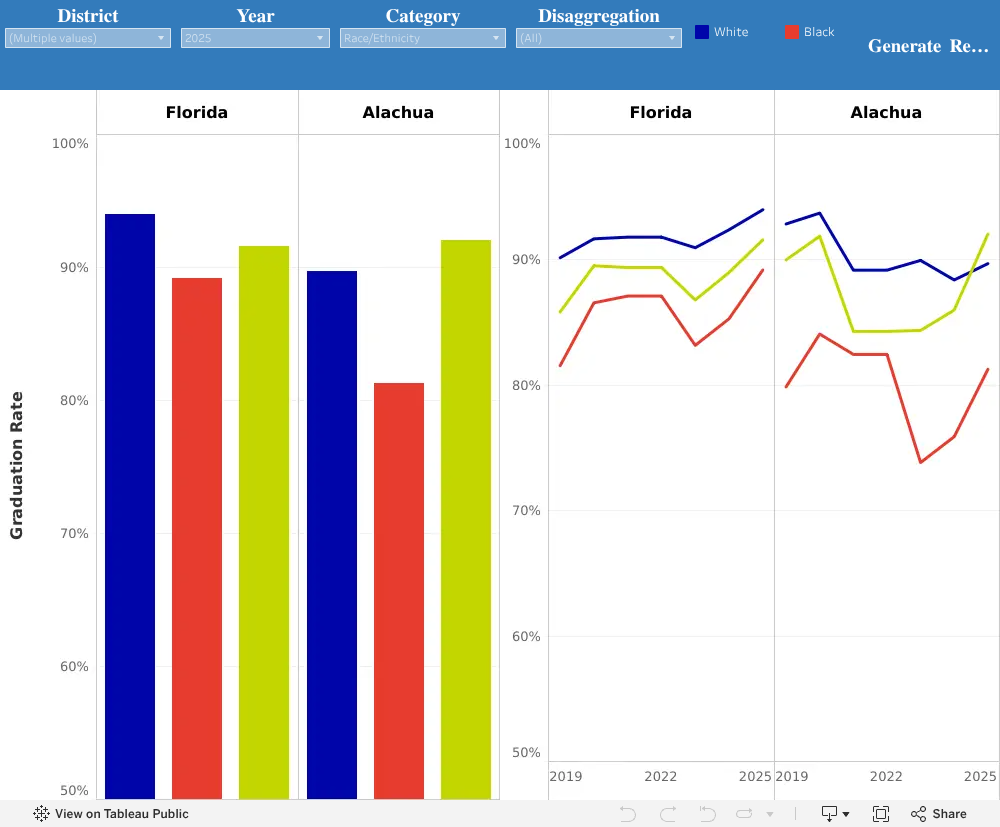
Race/Ethnicity: Because high school graduation is a strong predictor of postsecondary enrollment, examining trends across student groups is essential to ensuring that all learners have equitable opportunities to graduate, access college, and complete a degree. Florida saw increases in 2023-24 graduation rates for all racial/ethnic subgroups of students from the previous year.
Sex: Analyzing graduation rates by sex reveals differences in student outcomes that can inform efforts to improve educational attainment for all Florida students. Both male and female students graduated at higher rates than the previous year. In 2023-24, the graduation rate for males was 87.9%, an increase of 2 percentage points from the previous year; the graduation rate for females was 91.6%, an increase of 1.6 percentage points from the previous year.
Economic Status: Analyzing graduation rates across different socioeconomic backgrounds can lead to more equitable educational outcomes and improved economic opportunities for all Floridians. Did you know that in the 2023-24 academic year, Florida’s high school graduation rate for low-income students was 91.8%, compared to 96.1% for their non-low-income peers?
HS Graduation Pathways
Earning a high school diploma readies graduates for a postsecondary education and serves as a lever for access and opportunity to social and economic mobility, preparing students for Florida’s workforce needs. Disaggregating graduation rates by diploma pathway helps educators and policymakers assess whether some pathways are more effective at preparing students for college and careers than others.

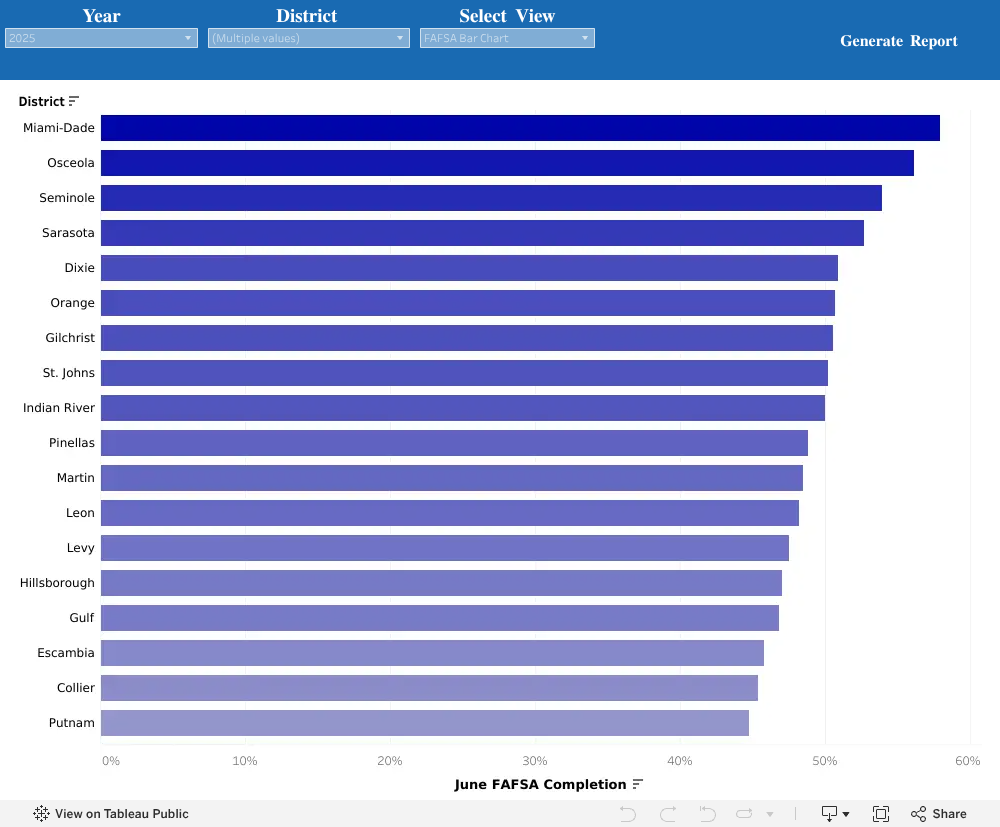
FAFSA
Completing the Free Application for Federal Student Aid (FAFSA) is a critical step in opening the door to postsecondary education. Completing the FAFSA determines a student’s eligibility for federal, state, and local financial aid. Research shows the primary reason students do not pursue an education beyond high school is perceived lack of affordability – FAFSA completion allows for informed decision-making. In 2025, Florida strengthened its commitment to postsecondary access when Governor Ron DeSantis signed HB 1255, embedding FAFSA education into the state’s high school financial literacy curriculum. This consistent, statewide approach ensures students receive accurate information about the FAFSA so they can access all eligible aid.