
WHY THIS MATTERS
From Attainment to Alignment: Meeting Florida’s Workforce Needs
Florida’s economy is rapidly evolving, and a growing majority of jobs now and will require education and training beyond high school. According to the Georgetown Center on Education and the Workforce, more than 72% of jobs nationwide will require a credential beyond high school by 2031. In Florida, that figure is about 64% representing over 6.5 million jobs.1
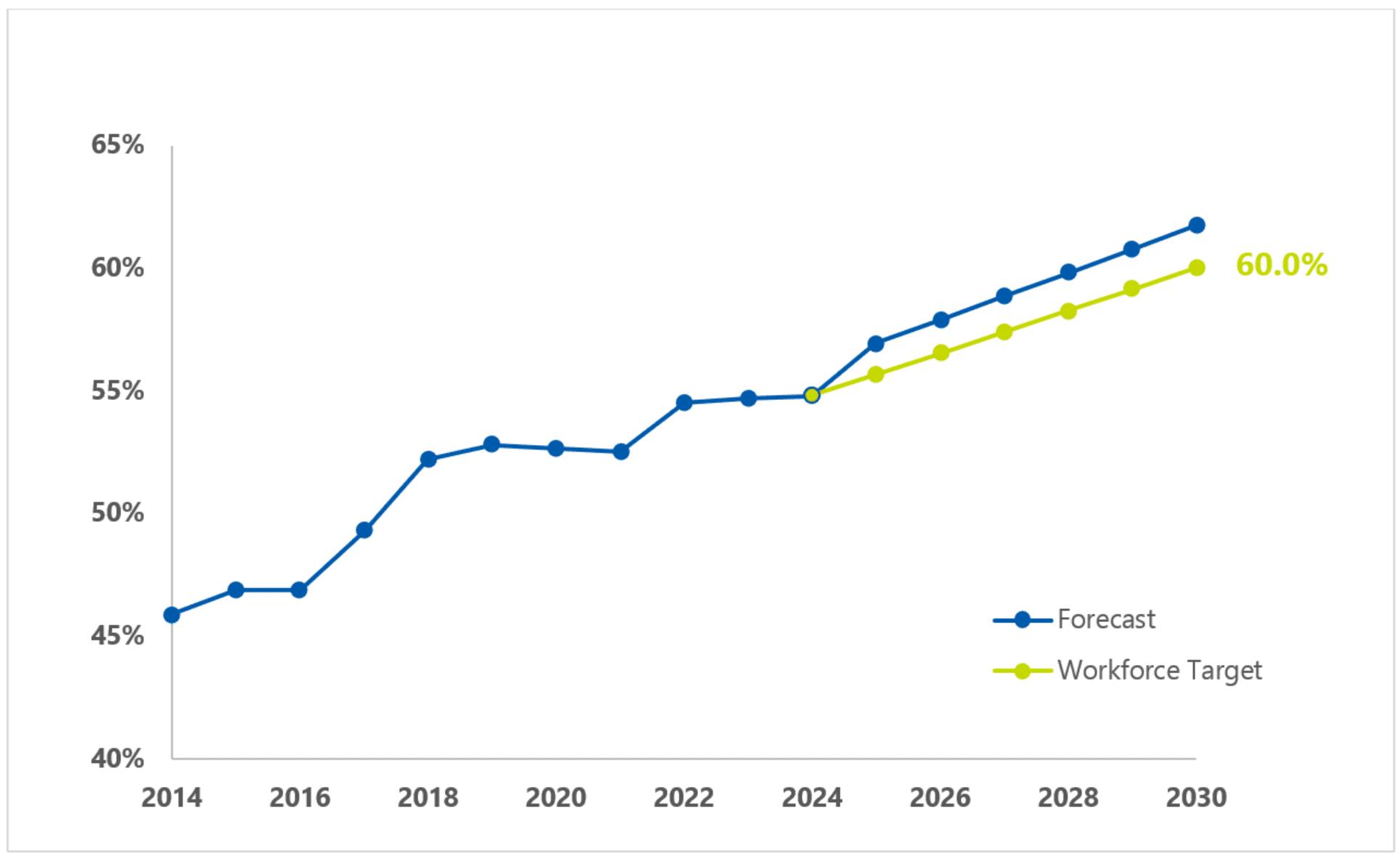
Today, 54.8% of working-age (25-64) Floridians hold a postsecondary credential of value.2 If the current trend continues, degree attainment in Florida is projected to reach approximately 61.7% by 2030, surpassing the state’s Sail to 60 goal. However, reaching this benchmark does not necessarily ensure that the credentials being earned are aligned with the evolving needs of Florida’s workforce. With Florida’s demographics shifting toward an older population, it is becoming increasingly important to ensure that more young people are receiving the education, training, and skills required for Florida’s continued economic competitiveness.
Florida’s Degree Attainment Rate Since 2014 with Projections through 2030
Lumina; FCAN
Education Beyond High School is Essential
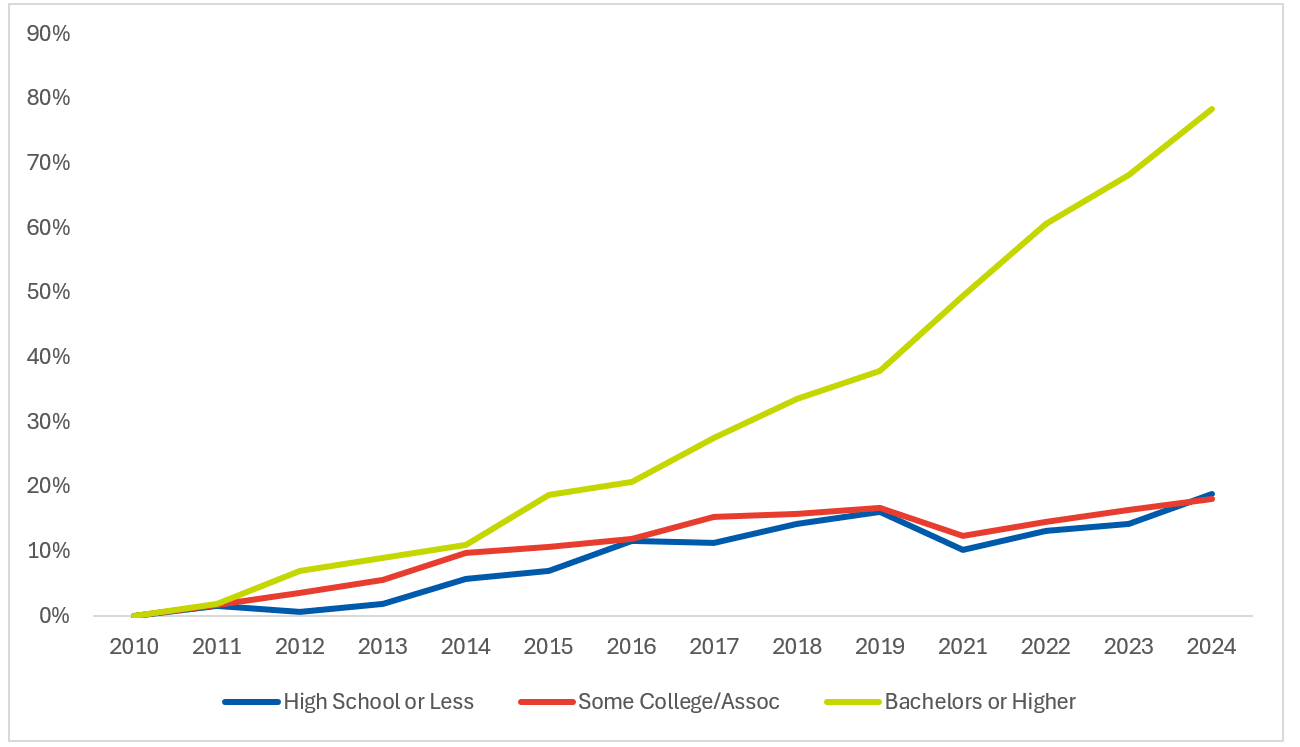
The gap between workforce demand and projected degree attainment is not simply about how many Floridians earn credentials, but whether those credentials align with labor market opportunities. Data show that between 2014 and 2024, employment growth has been concentrated in jobs requiring a bachelor’s degree or higher. Over this period, the number of jobs held by individuals with at least a bachelor’s degree has increased substantially, widening the gap compared to those with lower levels of education, including those with some college. In other words, job growth is increasingly concentrated in roles that require education beyond high school.3
Job Growth by Education Level Trend, 2014-2024 U.S. Census Bureau, ACS 1-YR, 2024
Lumina; FCAN
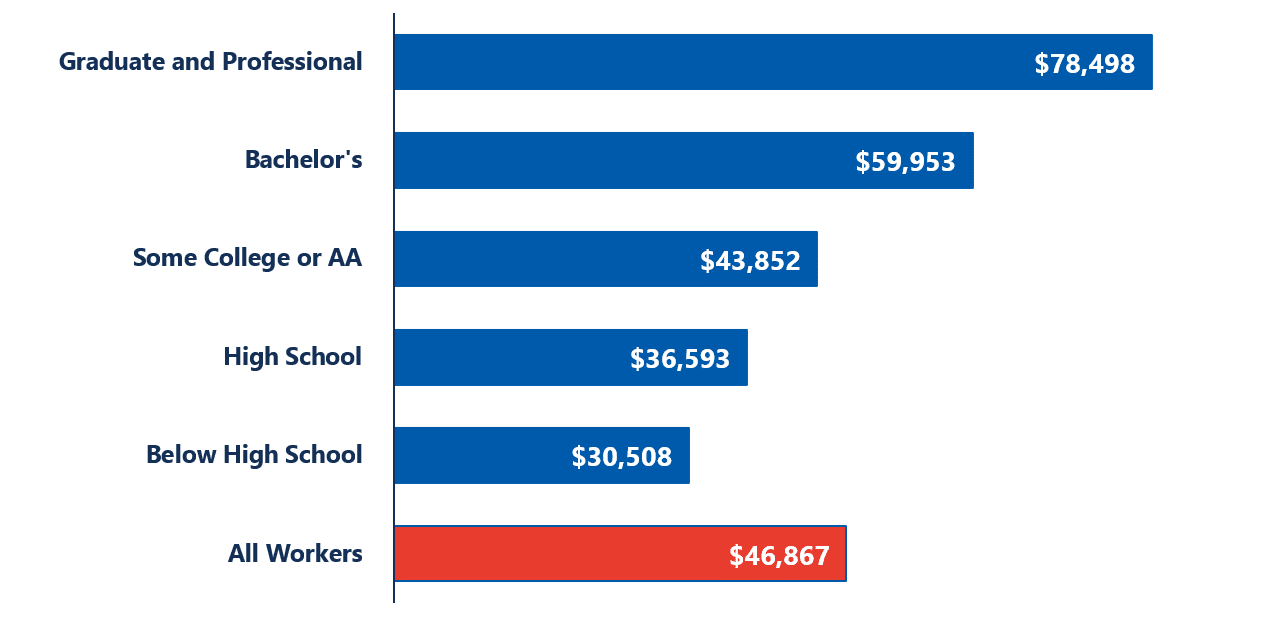
This misalignment becomes even clearer when looking at differences in earnings by education level. Most recent data shows that Floridians without a high school diploma earn far less than their peers with a bachelor’s degree, with a median annual income of about $30,508 while those with a bachelor’s degree earn $59,953, or 64% more than those with a high school diploma4, highlighting that higher education remains one of the most reliable pathways to higher wages and economic mobility. This earnings outcome data by level of education reinforces the economic value of higher levels of education and underscore the importance of not just reaching attainment goals but ensuring that credentials translate into meaningful economic opportunities.
Education Pays: Higher Degrees, Higher Earnings
U.S. Census Bureau, ACS 5-YR, 2024; Workers ages 25+
The Changing Face of College Students
While degree attainment, job growth, and median annual earnings are all important pieces to Florida’s ever-changing economy, it is important to understand who is pursuing higher education in the state. While many still picture an 18-year-old recent high school graduate, today’s postsecondary population is far more diverse: nearly half of students enroll part-time (49%)5, a third come from low-income backgrounds (33%)6, and more than one in five are adult learners aged 25 or older (21%)7.
Postsecondary Students At-a Glance

Growing Communities through Education Beyond High School
Understanding who is pursuing higher education is critical because communities benefit when more residents earn a degree or credential. Higher educational attainment is linked to a stronger tax base, lower crime rates, healthier residents, and greater capacity to attract employers offering good-paying jobs.8 As Paul Luna notes in the Florida Chamber Foundation’s Florida 2030 Blueprint Half-Time Report, “Our research shows that the more Florida residents have some form of postsecondary education, the greater the economic benefit to them, their families, their communities, and certainly to the state overall.”
Closing the Opportunity Gaps
Florida ranks 26th in the share of working-age adults with a postsecondary credential9. To close this gap, the state must address key barriers along the education pipeline and ensure Floridians can access growing, well-paying jobs:
- High school graduation: 89.5% for economically disadvantaged students vs. 94.7% for their non-economically disadvantaged peers 10
- Early college progress: 57.8% of low-income students complete a full year of credit within two years, compared to 70.2% of higher-income students
- Postsecondary attainment vs. job demand: 54.8%11 of adults hold a degree or credential today, while 64% of jobs will require one by 203112
- Earnings gap: Median income for adults with a bachelor’s degree is 64% higher than for those with only a high school diploma
Closing these gaps is critical to strengthening Florida’s workforce, expanding opportunity, and ensuring long-term economic growth.
Endnotes
1 Georgetown Center on Education and the Workforce, After Everything: Projections of Jobs, Education, and Training Requirements through 2031Report, November 2023.
2 Lumina, Stronger Nation Report, 2025
3 U.S. Census Bureau, American Community Survey (ACS) 1-Year Estimates, Table B23006, 2024
4 U.S. Census Bureau, ACS 5YR B20001
5 IPEDS, Fall Enrollment, Attendance Status, 2024
6 IPEDS, Student Financial Aid, Number of Students Awarded Pell Grants, 2023-24
7 IPEDS, Fall Enrollment, Age Category (25-64), 2024 (data submission was optional this year)
8 Education Pays 2023: The Benefits of Higher Education for Individuals and Society (Ma & Pender, College Board, 2023)
9 Lumina, Stronger Nation Report, 2025
10 FL DOE, Know Your Schools, Graduation Rate, 2024-25
11 Lumina, Stronger Nation Report, 2025
12 Georgetown Center on Education and the Workforce, After Everything: Projections of Jobs, Education, and Training Requirements through 2031Report, November 2023.