What is a 10% increase in college enrollment worth to Tampa Bay? Try nearly $1 billion a year. That was the headline finding when business leaders, educators, philanthropists, and civic champions gathered at Community Foundation Tampa Bay this month to explore how postsecondary education drives regional economic prosperity.
The February 6 breakfast brought together 50 stakeholders to explore how that gap could be closed and what it would take to reach 1,120 more students.
The Challenge: A Talent Gap with Billion-Dollar Consequences
The numbers show why Tampa Bay leaders are paying attention.
By 2031, an estimated 64% of jobs in Florida will require education or training beyond high school. Yet today, only about 55% of Floridians hold a postsecondary credential.
In the LEAP Tampa Bay region covering Hillsborough and Pinellas counties, the numbers tell an urgent story:
- 9% of high school graduates enroll in college, leaving thousands of students on the sidelines
- An estimated $34 million in Pell grants were left on the table last year, based on the regional FAFSA completion rate
“This gap represents billions in lost economic potential,” said Paul Luna, president and CEO of Helios Education Foundation, in his keynote address. “And it’s not just lost dollars. It’s lost opportunity for families, for communities, and for the workforce Tampa Bay needs to remain competitive.”
The Research: Florida’s Future Billions
The event featured a deep dive into Helios Education Foundation’s groundbreaking research report, Florida’s Future Billions: How Expanding College Access, Participation, and Attainment Will Increase Prosperity in Florida, presented by Dr. Paul Perrault, Senior Vice President of Community Impact & Learning at Helios, along with Dave Sobush, Director of Research & Policy at the Florida College Access Network (FCAN), and Kimberly Lent Morales, Director of Research & Evaluation at Helios.
The findings were stark but also actionable. For Tampa Bay:
- Increasing enrollment by 10% (1,120 students) would generate $997 million annually in social value
- Increasing degree completion by 20% would add $638 million annually
- Achieving college enrollment and completion parity across racial groups would contribute $607 million annually
“These aren’t abstract projections,” Sobush said. “These are real dollars that come back to families, businesses, and communities.”
The research modeled economic effects across individual, social, and fiscal perspectives, tracking lifetime earnings, health outcomes, reduced criminal justice costs, workforce productivity, and tax revenue.
“What the data shows us,” said Lent Morales, “is that when students enroll in college and complete degrees, the returns compound. Individuals earn more. Communities become healthier. Businesses attract talent. Tax revenues increase. It’s a cycle that strengthens everything.”
The LEAP Model: 10 Years of Partnership-Driven Impact
At the center of Tampa Bay’s college access infrastructure is LEAP Tampa Bay, a community-led network that has spent the past decade building the partnerships, systems, and supports that help students navigate the path from high school to college completion.
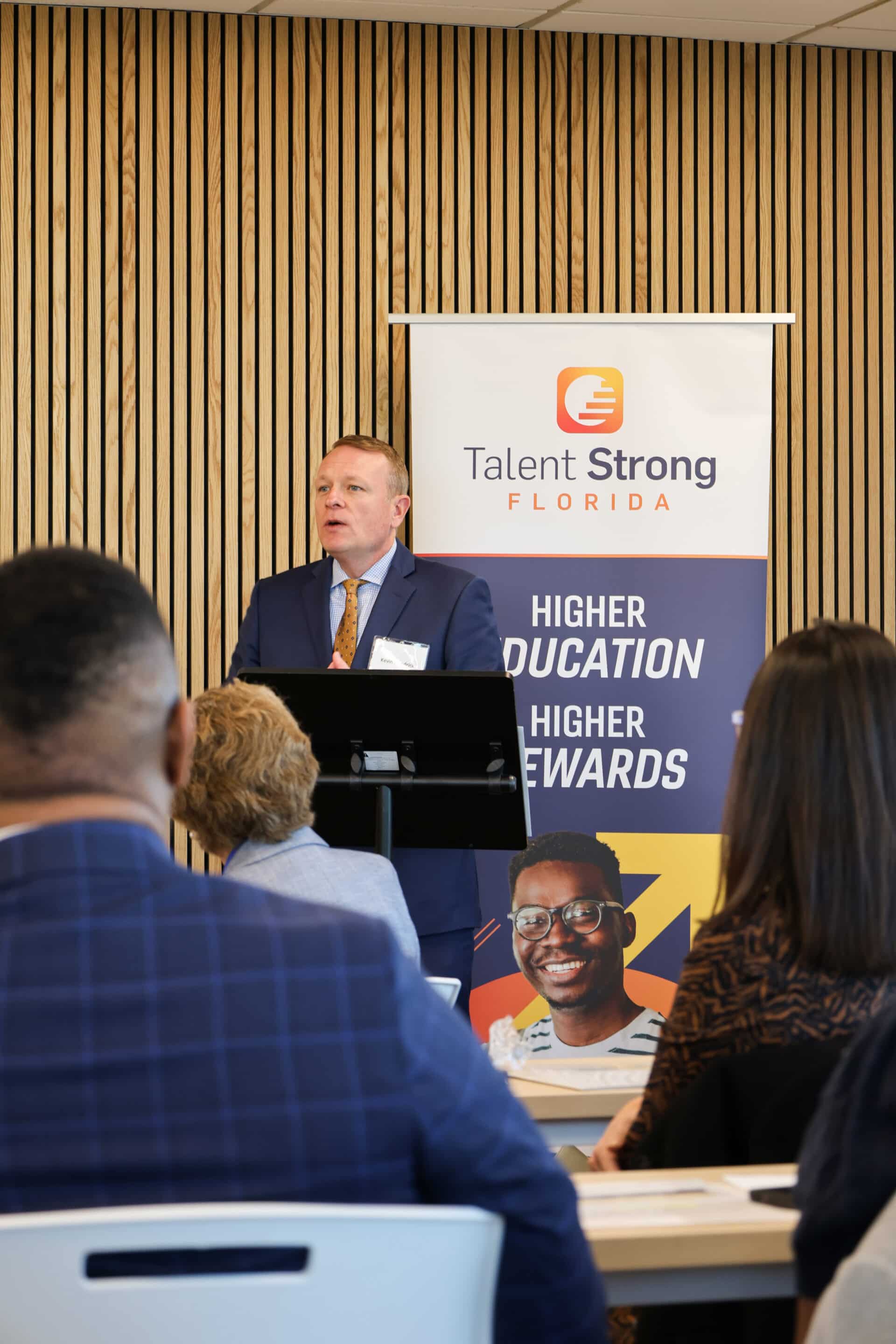
Pictured: Superintendent Kevin Hendrick, Pinellas County Schools
Superintendent Kevin Hendrick of Pinellas County Schools, a longtime LEAP champion, shared how the network has transformed the landscape for students.
“In 2018, we started with a small summer seminar designed to support high-achieving students from communities historically underrepresented in higher education. Students and families began asking: How do we get more of this support year-round? How can we help ourselves and others navigate the college process?”
That question, Hendrick said, sparked systemic change. Today, every high school in Pinellas County, and now Hillsborough County, has a dedicated College and Career Center with trained coordinators available to all students.
“These centers have become hubs of opportunity,” Hendrick said. “We’re seeing direct results: Students who visit these centers are more likely to complete the FAFSA, enroll in college, and persist to graduation.”
The model works because it meets students where they are, with trusted adults, localized supports, and connections to scholarships and college partners.
“I was a first-generation college student,” Luna said. “My dad told me I was going to college, but when I struggled, he’d say, ‘I don’t know how to help you. I never went to college.’ One of the hardest things as a first-gen student is admitting when you’re struggling, because you think you’re the only one who doesn’t get it.”
That’s the gap LEAP and other college access networks across Florida close. And it’s the gap that, when closed at scale, unlocks billions.
The Commitment: FUSE Scholarship Fund Reaches $3 Million
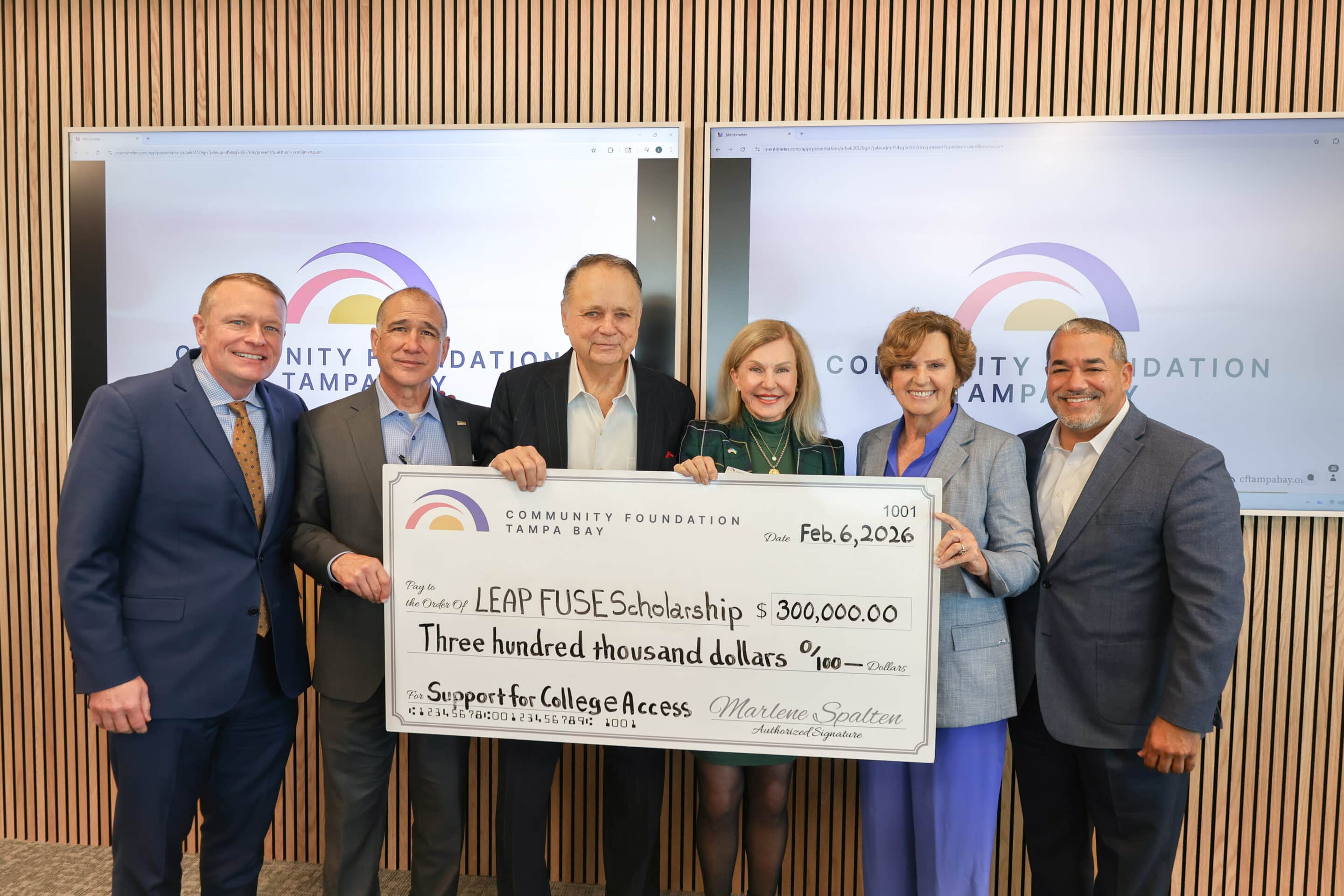
The event concluded with a powerful announcement: LEAP Tampa Bay and its partners successfully met a challenge from Helios Education Foundation, raising the last $300,000 in order to receive the final match of $500,000 from Helios, bringing the FUSE Scholarship Fund to $3 million. The gift from fundholders Carl and Lyda Lindell supports FUSE, a seamless transfer program between the University of South Florida and eight Florida state colleges, including Hillsborough College and St. Petersburg College.
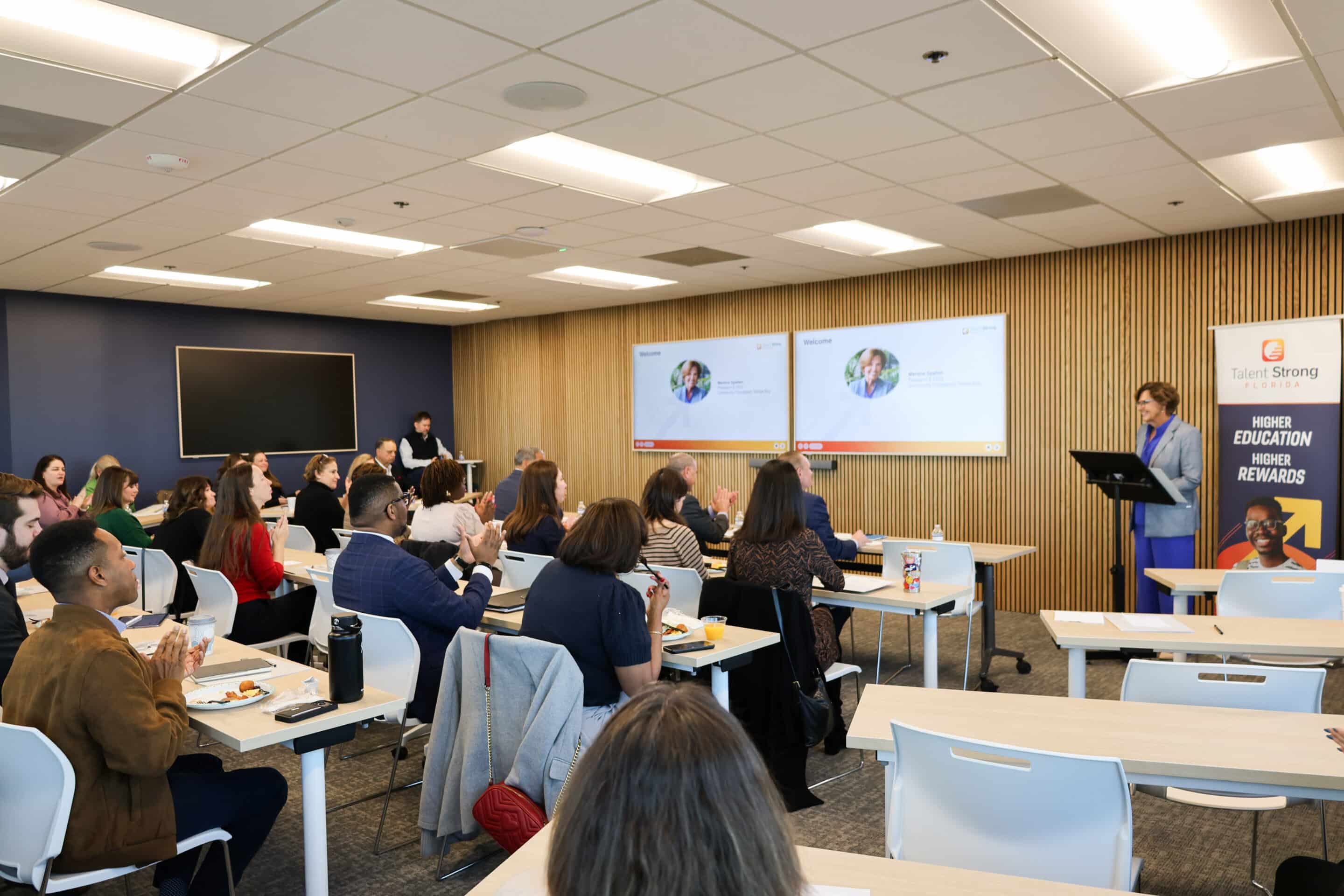
Pictured: Marlene Spalten, President and CEO, Community Foundation Tampa Bay
The scholarships, up to $5,500 per student, help first-generation, minority, and underrepresented students complete both associate and bachelor’s degrees by filling financial gaps not covered by other aid.
“This is what partnership looks like,” said Marlene Spalten, president and CEO of Community Foundation Tampa Bay and chair of the FCAN Board of Advisors. “When leaders step up, students win.”
Watch the Story: LEAP Champions Video
Throughout the summit, attendees heard from the voices that matter most: students, educators, superintendents, business leaders, and community champions who are living the LEAP story every day.
Watch the LEAP Champions video to see what 10 years of sustained partnership looks like and why this work matters now more than ever.
About Talent Strong Florida: Talent Strong Florida is a statewide campaign led by the Florida College Access Network (FCAN) and supported by Helios Education Foundation, aimed at increasing postsecondary enrollment and attainment to ensure 60% of working-age Floridians hold a high-value credential by 2030. The campaign mobilizes Local College Access Networks (LCANs) across the state to close enrollment gaps and strengthen Florida’s workforce. Learn more: TalentStrongFlorida.org