Student fellows supported by the Florida College Access Network (FCAN) traveled to Tallahassee, Florida, from January 19–21 to participate in the fifth annual FCAN Days at the Capitol. This immersive program equips students with the skills, knowledge, and confidence to champion education policies and promote student success across Florida.
Throughout the three-day experience, eleven student fellows representing colleges and universities from across the state engaged directly with elected policymakers and their staff members, sharing their personal academic journeys and insights into how higher education policies affect their ability to access, afford, and complete college.
“Education is the second-largest area of spending in the state budget each year. With all that Florida invests in education, it is important lawmakers hear directly from students on what programs have been most impactful, and where more attention is needed,” said Sarah Foster, FCAN policy analyst.
Preparing Students for Policy Engagement
After three months of virtual meetings, students gathered on the first day to prepare for meetings with legislators, followed by a tour of the Florida Capitol Complex grounds. On days two and three, fellows met with lawmakers and staff – logging 31 total meetings – to discuss FCAN’s 2026 policy priorities, focusing on policies that directly impact college affordability and completion for Florida students.
FCAN’s 2026 Policy Priorities Include:
- Expand Access to the Florida Student Assistance Grant (FSAG):
FSAG is a need-based grant program supporting Florida undergraduates with demonstrated financial need. However, funding levels have remained stagnant since 2017, leaving tens of thousands of eligible students without assistance amid an increase in cost of living. Expanding FSAG appropriations and strengthening FAFSA completion support would allow more students to afford college, reduce reliance on student loans, and improve statewide degree attainment. - Support Emergency-Based Aid Programs for Students:
Unexpected financial emergencies, such as medical bills, housing instability, or car repairs, are a leading cause of college dropout. Supporting expansion of college and university emergency aid programs or increasing institutional flexibility in how funds are distributed can help students remain enrolled during short-term crises, ultimately improving retention and graduation outcomes, and improving returns on taxpayer investment. - Strengthen Dual Enrollment Financial and Outcome Reporting:
Dual enrollment programs allow students in grades 6–12 to earn college credit at no cost, accelerating time to degree and reducing college expenses. However, gaps in financial and outcome reporting limit transparency and long-term evaluation. Improved tracking of local costs, student participation, and postsecondary outcomes would provide a clearer picture of the return on investment for students, families, and taxpayers.
Student Voices
Throughout their legislative meetings, student fellows shared powerful personal stories that illustrated what these policies and programs mean to them and their education.
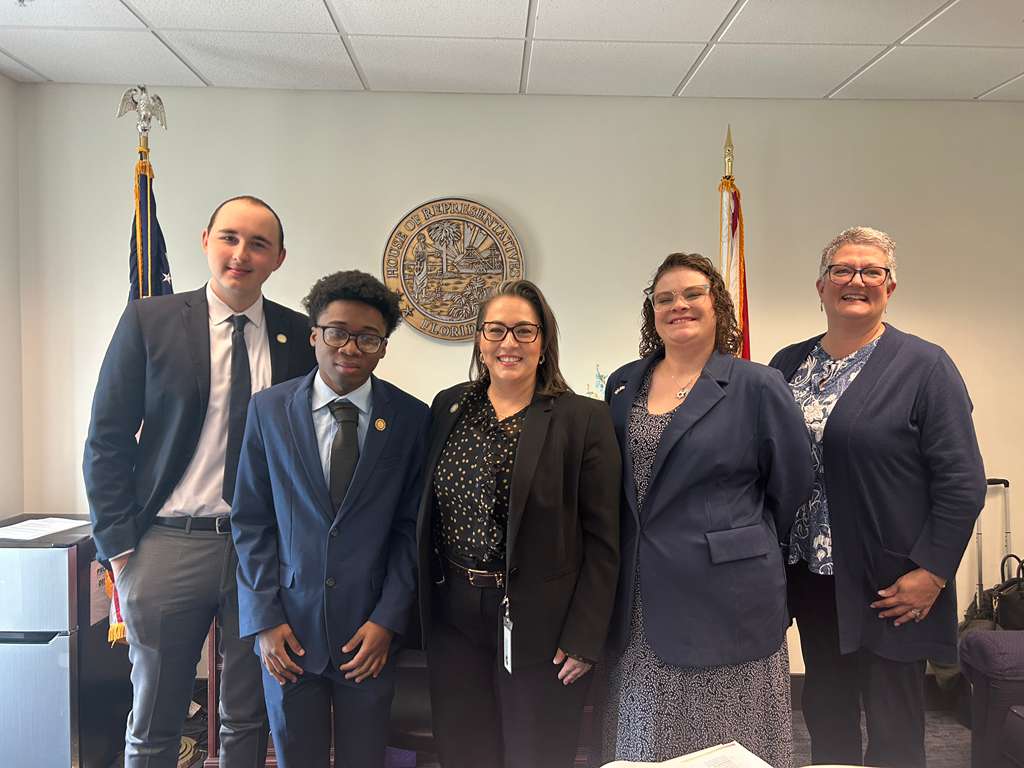
Student fellows and LCAN mentor with Representative Debra Tendrich
Andrea Dionicio, Florida International University student, discussed expanded access to dual enrollment, drawing from her own experience with the program and its transformative impact on her educational path. She shared how early exposure to college coursework shaped her confidence and aspirations.
“Dual enrollment played a huge role in my educational journey. Without it, I likely would have never seriously considered education beyond high school,” said Dionicio.
As a former dual enrollment student, Bryce Gillingham, University of Florida student, highlighted the academic and personal opportunities the program provided, including accelerated credit attainment and campus involvement. His experience motivated his focus on improved reporting and program growth.
“My time as a dual enrollment student was truly amazing and because of that I strive to ensure as many students as possible can enjoy the benefits of the program,” said Gillingham. “I had the opportunity to earn 55 college credits, which is basically an entire associate’s degree, by high school graduation.”
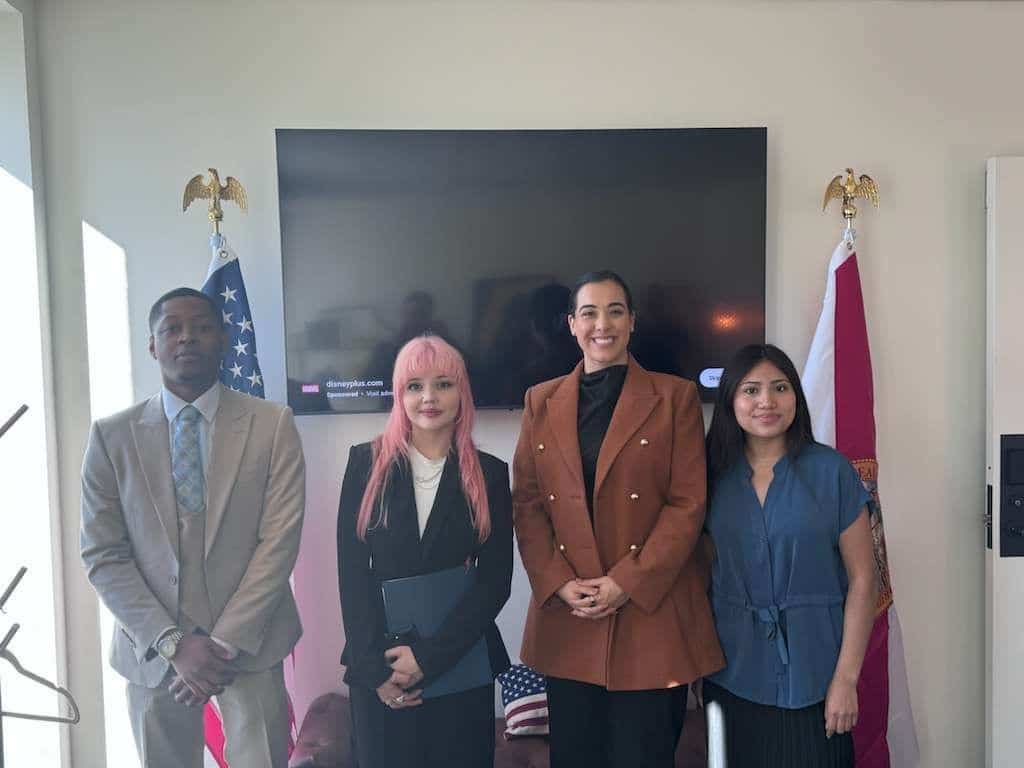
Student fellows with Senator Alexis Calatayud
Samuel Streete, Palm Beach State College student, focused on increasing funding and improving distribution for the FSAG while also supporting emergency aid and dual enrollment. Through FCAN, he gained insight into how policy change happens behind the scenes.
“I personally discussed an increase in funding for the Florida Student Assistance Grant as funding has been stagnant since 2017,” said Streete. “This experience showed me that change doesn’t happen overnight, but it does happen when students speak up and stay engaged.”
Alyssa Robinson, Valencia College student, emphasized the role of lived experience in shaping meaningful policy conversations.
“Sharing real, lived experiences allows policymakers to see how legislation impacts students beyond statistics and reports. Overall, this experience strengthened my confidence as a student fellow,” said Robinson.
Insights from Higher Education and Policy Leaders
In addition to legislative meetings, students had the opportunity to learn from experienced leaders across higher education and public policy.
Zenani Johnson, a second-year law student at Florida State University and former FCAN Student Fellow, shared her journey into advocacy and emphasized the power of student voice. Drawing from her experience advocating for students facing housing insecurity and serving as Chair of the Florida Student Association, Johnson reminded students that meaningful change often starts with speaking up and staying persistent.
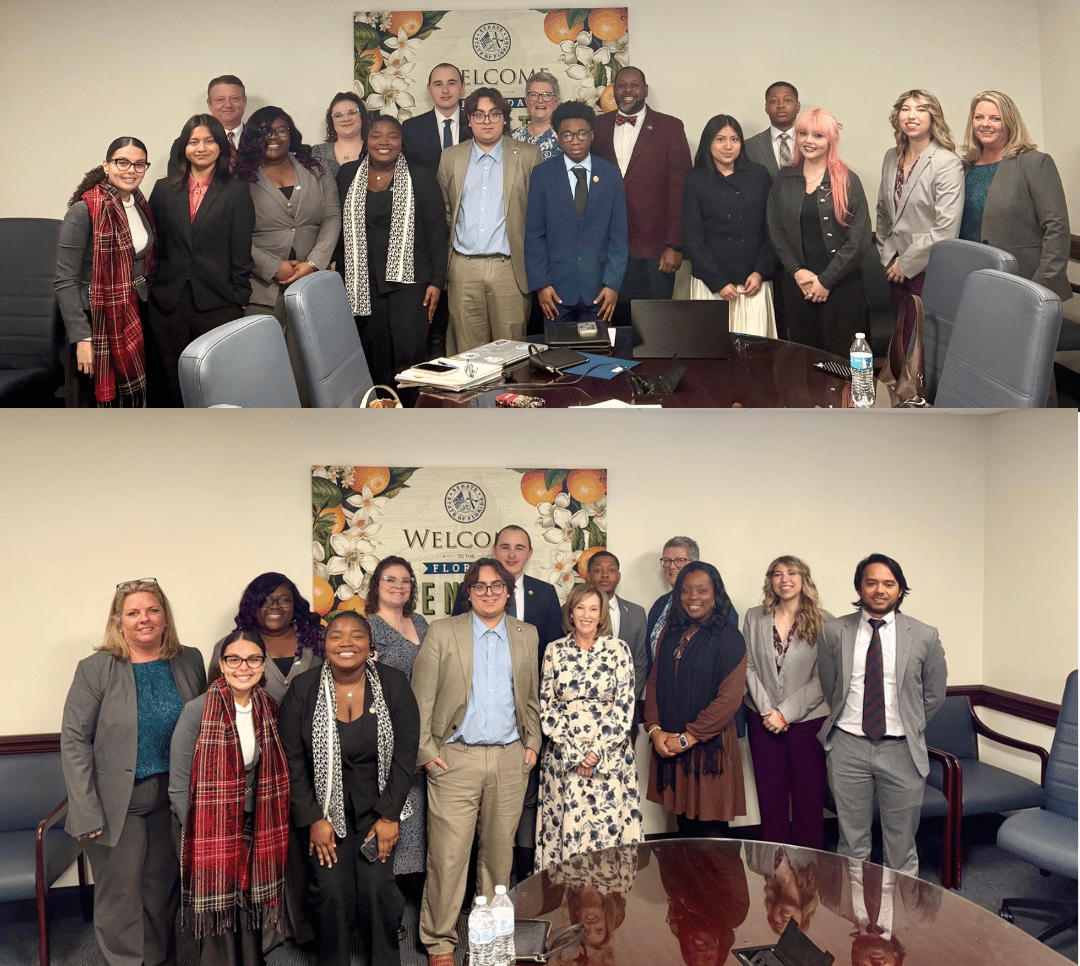
Student fellows with Dr. Altony Lee III and Wendy Dodge.
Dr. Altony Lee, III, Associate Vice Chancellor for the State University System, offered practical guidance on navigating the legislative process, emphasizing that every session is different and preparation is key. He encouraged students to do their research and follow up with policymakers to build lasting relationships.
Troy Miller, Chief Data Officer for the State University System Board of Governors, shared his personal academic journey and highlighted the importance of using data thoughtfully to understand and address student challenges. He noted that data must be paired with context and lived experience to meaningfully inform higher education policy and affordability decisions.
Wendy Dodge, lobbyist at The Southern Group, spoke about career growth and the importance of embracing change, even when transitions are difficult. She encouraged students to find new opportunities for learning and long-term development.
Leveraging Momentum
As FCAN Days at the Capitol concluded, student fellows left Tallahassee with a deeper understanding of the legislative process. By sharing their stories, building relationships with policymakers, and learning from experienced leaders, students reinforced the vital role their voices play in shaping education policy.
“Being part of the FCAN Student Fellows Program expanded my understanding of how policy decisions are made and how student voices can directly influence those decisions,” said Tyler Hawkins, Florida State University student. “The program helped me connect my lived experiences to data, policy language, and real legislative action.”
The program highlights FCAN’s ongoing commitment to empowering students to advance policies that improve college access and success for all Floridians. To ensure this momentum is leveraged, FCAN will open applications for the 2027 Student Fellows cohort in late summer/early autumn.
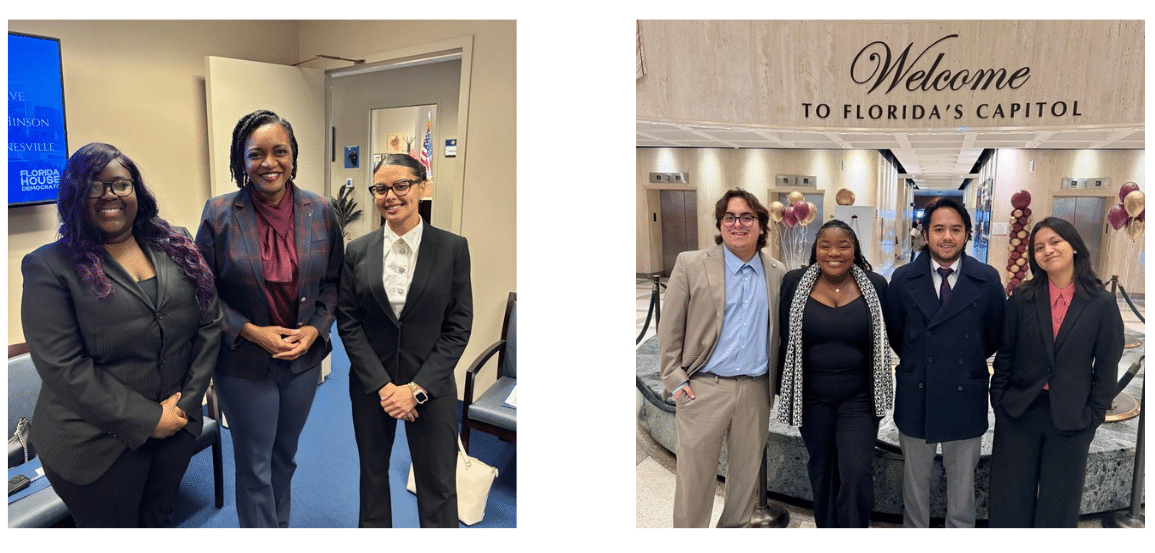
Left: Student fellows with House Minority Leader, Fentrice Driskell. Right: Student fellows with mentor, Daniel Vanegas