
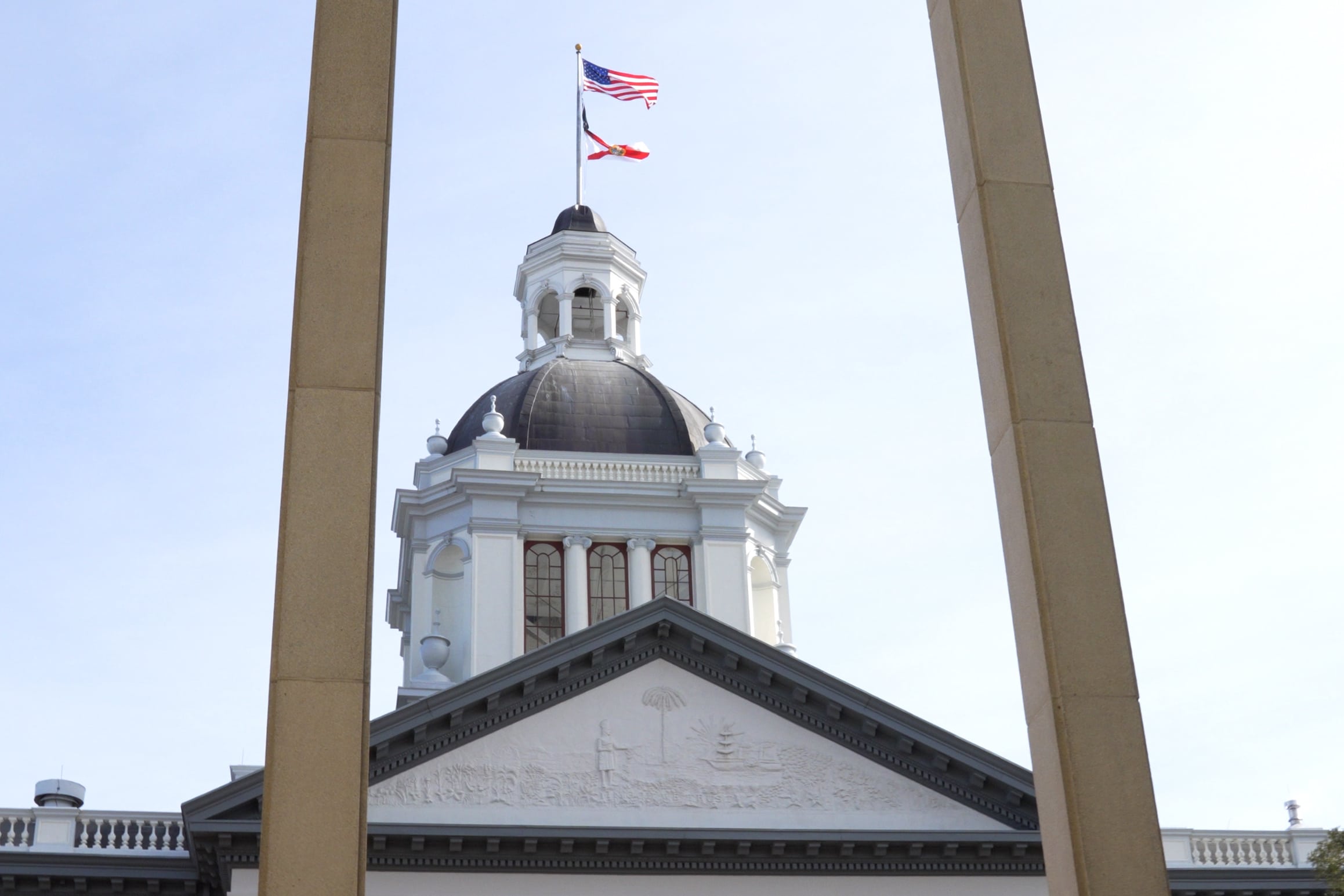
Running 45 days longer than normal, Florida’s 2025 legislative session adjourned on Monday, June 16, after passing 262 bills and a balanced budget totaling $115.1 billion.
On July 15, during our 2025 Legislative Session Recap webinar, special guests Senator Alexis Calatayud (R – Miami) and Nicole Washington of Washington Education Strategies joined FCAN staff to discuss higher education legislation and appropriations passed during the 2025 session, diving deeper into FCAN’s recently released policy recap brief and budget recap brief.
All bills discussed and the budget (with vetoes) were signed into law by Governor DeSantis.
Session Overview – A Leadership Perspective
Senator Calatayud shared insight into the 2025 session, including her SB 1618, the companion to HB 1255, as well as the importance of supporting postsecondary access, particularly for low-income and first-generation college students, calling it a “game-changer” for Florida’s future. She explained the importance of continuing to invest in postsecondary education within the confines of a balanced budget and chamber negotiations. Senator Calatayud shared her former experience as a student leader working with FCAN and the national access network to elevate student issues and focus them amongst Florida legislators.
House Bill 1255
This new law included a key provision that was a priority of FCAN: The expansion of the high school financial literacy course to include instruction on the FAFSA. Senator Calatayud discussed conversations with Senate leadership and Senate Minority legislators that led to this specific provision being included.
Senator Calatayud also highlighted the expansion of income eligibility for school readiness programs as a component of HB 1255 particularly important to her, and further supporting working families.
Senate Bill 2510
Changes to accelerated program incentive funding were closely followed this session by parents, students, and education stakeholders alike. SB 2510 established a new funding structure for high school accelerated program funding. The “Academic Acceleration Options Supplement” was funded at $596 million for 2025-2026.
SB 2510 also included new reporting requirements for school districts. The Department of Education requires school districts to report their total acceleration outcomes, and based on those outcomes, the state will allocate funds in a proportional share. In addition, school districts must report expenditures of acceleration supplement funds to the Legislature.
Senate Bill 2-C
Signed into law during the special session C on immigration in February, SB 2-C repealed the 2014 policy permitting some undocumented students to receive an out-of-state fee waiver to attend a state university, college, or technical center. Reevaluation of current students that receive an out-of-state fee waiver is currently underway.
There are approximately 6,500 students that receive this out-of-state-fee waiver between the state universities and state colleges.
House Bill 1105
One of the provisions included in HB 1105 was the elimination of the certificate of completion. Students will no longer receive a certificate of completion from high school.
A certificate of completion was a document that certain students received at graduation, indicating they had completed high school, however, it was not a standard high school diploma. A certificate of completion was given when a student failed to earn a 2.0 GPA, or, fell short of a qualifying score on any of the standardized tests eligible for issuance of a standard diploma.
The new law also requires the Department of Education to develop a document that outlines options to students that fail to earn a standard diploma.
Senate Bill 584
Under this new law, colleges and universities are required to develop plans that prioritize housing for students that have experienced homelessness or have been part of the foster care system.
In addition, the law calls for a study to be completed by December of 2026, that will examine the barriers these youth face when trying to access housing.
Year 2025-2026 Budget
Nicole Washington provided an overview of the budget for fiscal year 2025-2026. After just more than $500 million in line-item vetoes, the Governor signed a $114.77 billion budget effective July 1. Major items are listed below and included in FCAN’s budget recap brief:
- Florida Student Assistance Grant (FSAG): $269 million
- Bright Futures: $637.7 million
- Effective Access to Student Education (EASE) Grant: $135.9 million
- State University System: $3.9 billion
- $645 million for performance-based funding incentives
- $18.5 million for incentives for Programs of Strategic Emphasis (Buy One, Get One Free)
- This represents an approximate 50% decrease from last year’s allocation of $38 million. Additionally, new policy specifies that tuition and fee waivers for these programs are available after all other financial aid has been applied and is based on the student’s out-of-pocket expense.
- Florida College System: $1.68 billion
- $20 million to support industry certifications in high-skill, high-demand areas at Florida colleges
- $30 million for student success incentive funds
- No tuition increases for in-state students
- Nicole Washington discussed a provision in the budget implementing bill that allows university boards of trustees to consider increasing out-of-state tuition and fees.
Show Notes:
To learn more and watch the webinar, take advantage of these resources: