Gainesville is home to one of the largest universities in the country. For students without a family history of college, that proximity does not automatically translate into access.
Nearly a quarter of Alachua County residents live below the poverty line, roughly double the state and national averages. More than half of the county’s elementary school students qualify for free or reduced-price lunch. The University of Florida’s research labs, law school and medical center are fixtures of the local economy, but for many students growing up in Gainesville, higher education can feel like something that happens to other people’s children.
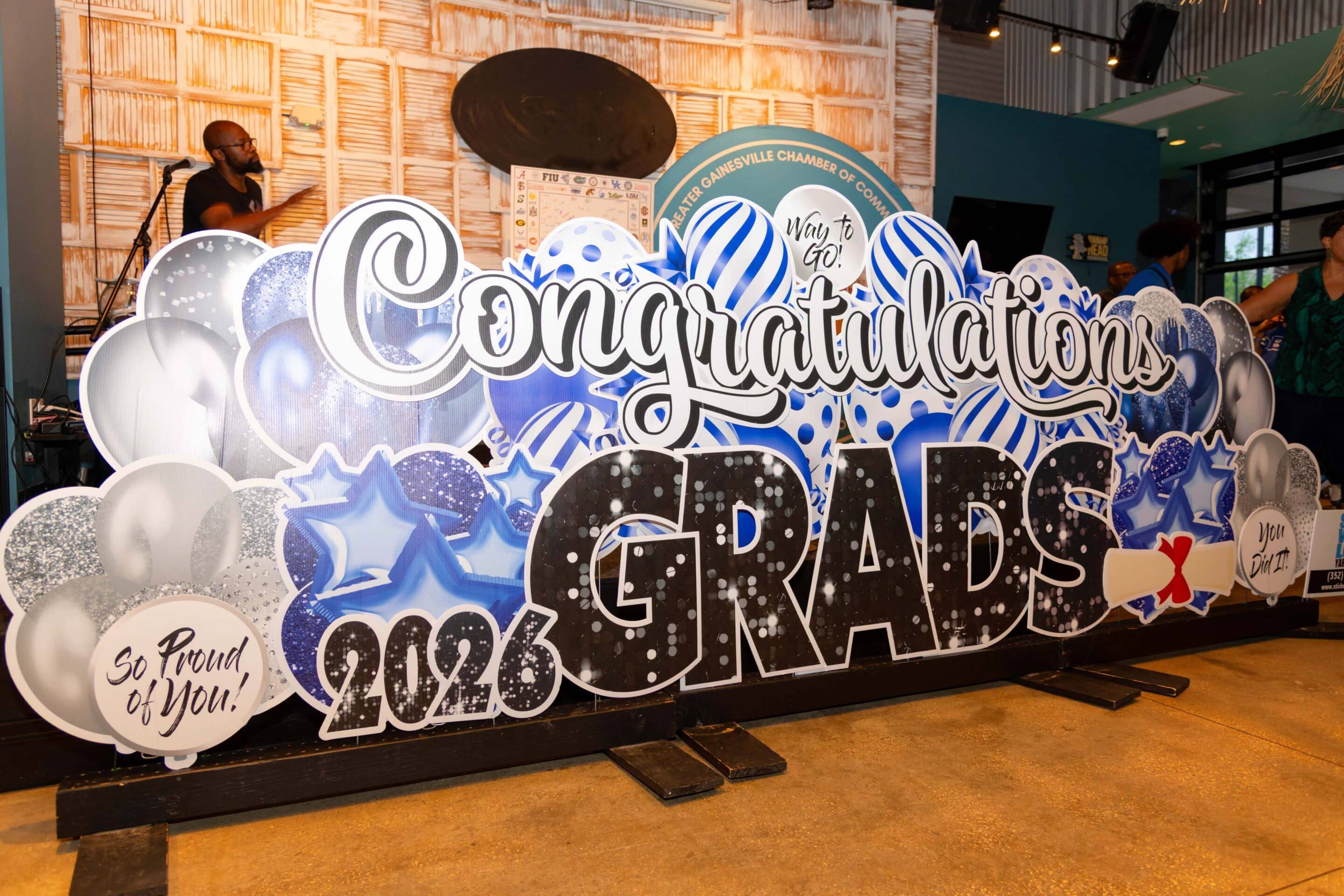
The Greater Gainesville Chamber Foundation’s annual College Decision Day was designed to push back against that perception: directly, publicly and with a community behind it.
What Makes It Different
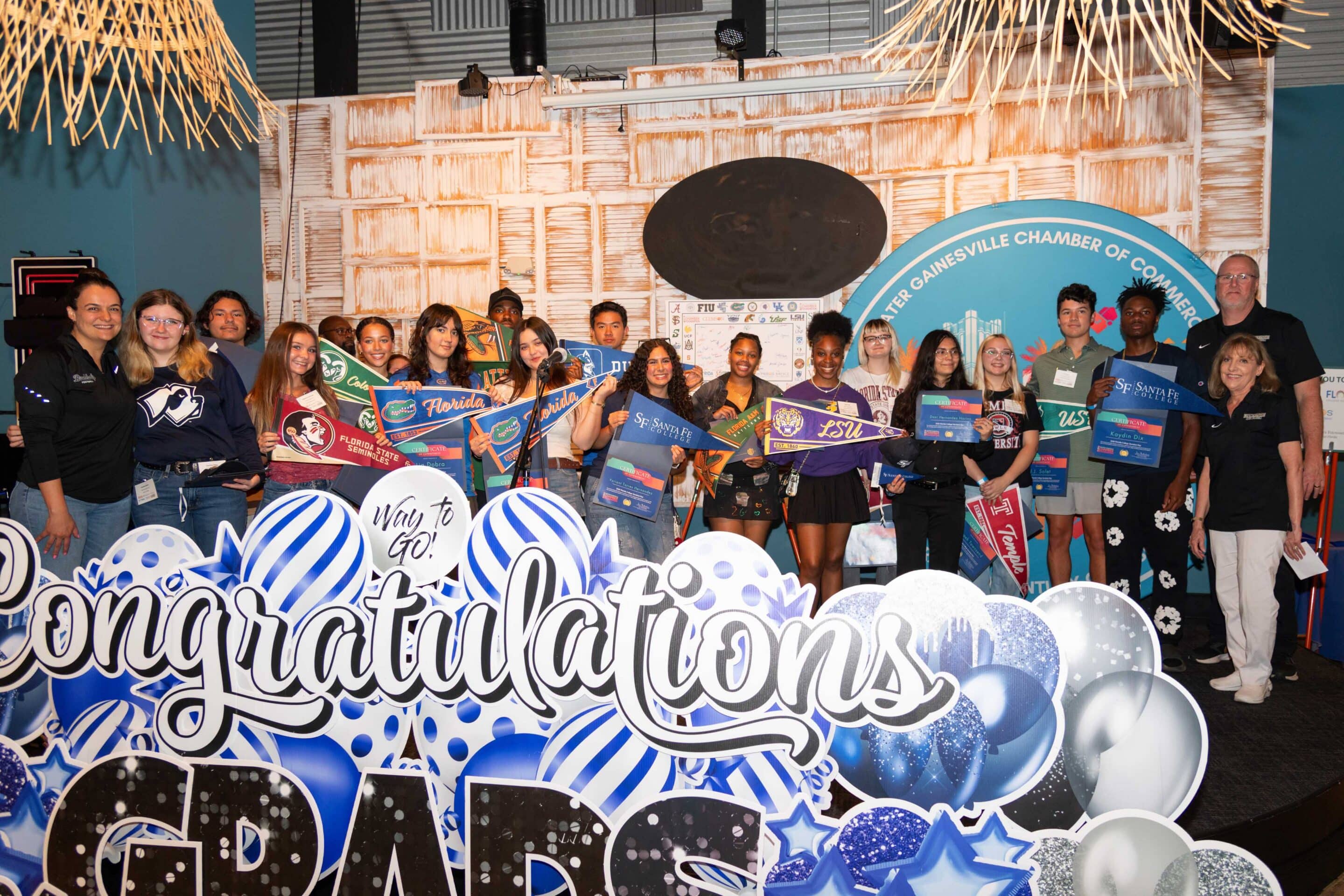
Most College Decision Day events happen on school campuses. Gainesville’s version moves the celebration into the broader community. Students from multiple public and private high schools gather at a shared venue, surrounded by families, local business partners, Greek letter organizations, and community leaders who show up specifically to bear witness to this milestone.
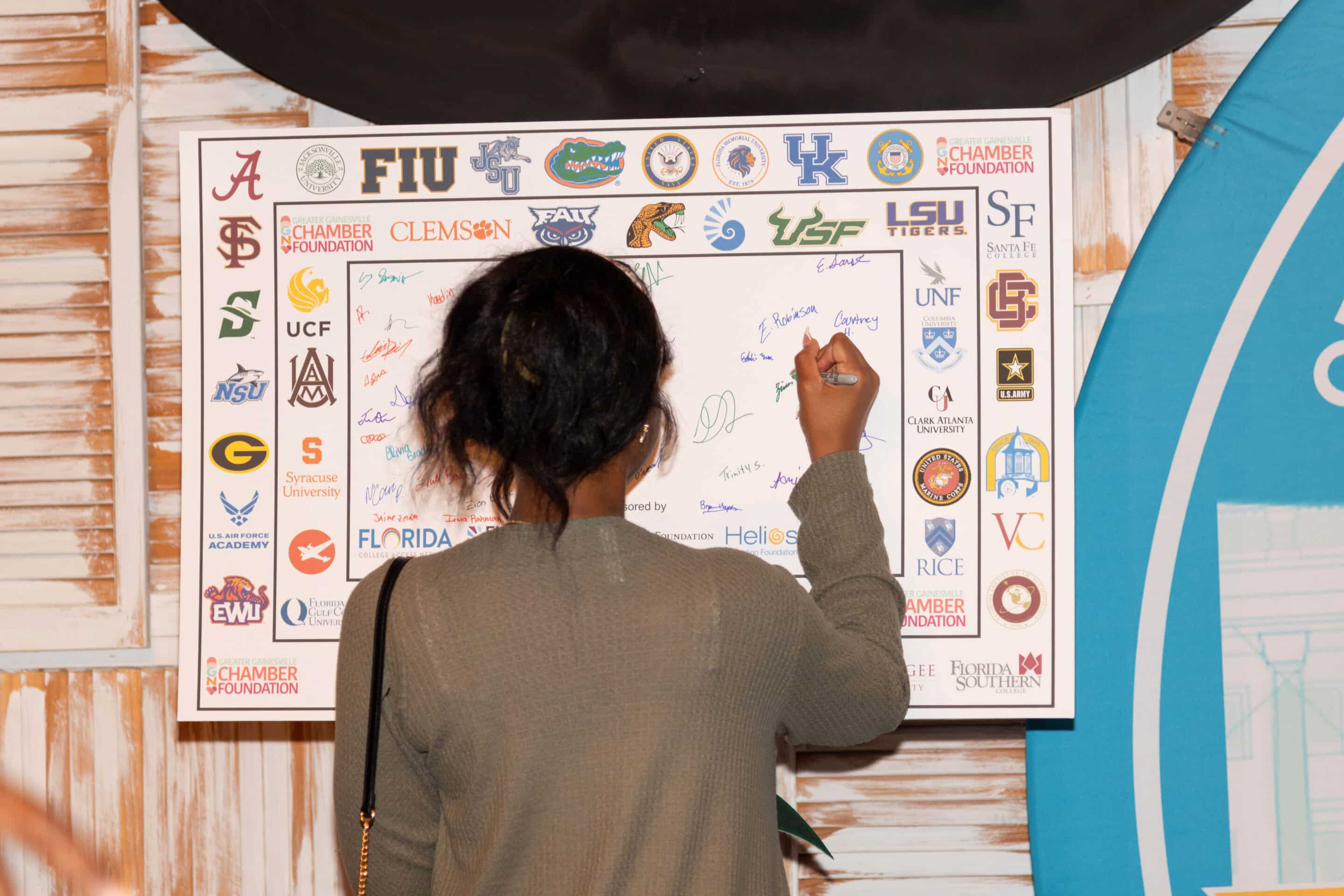
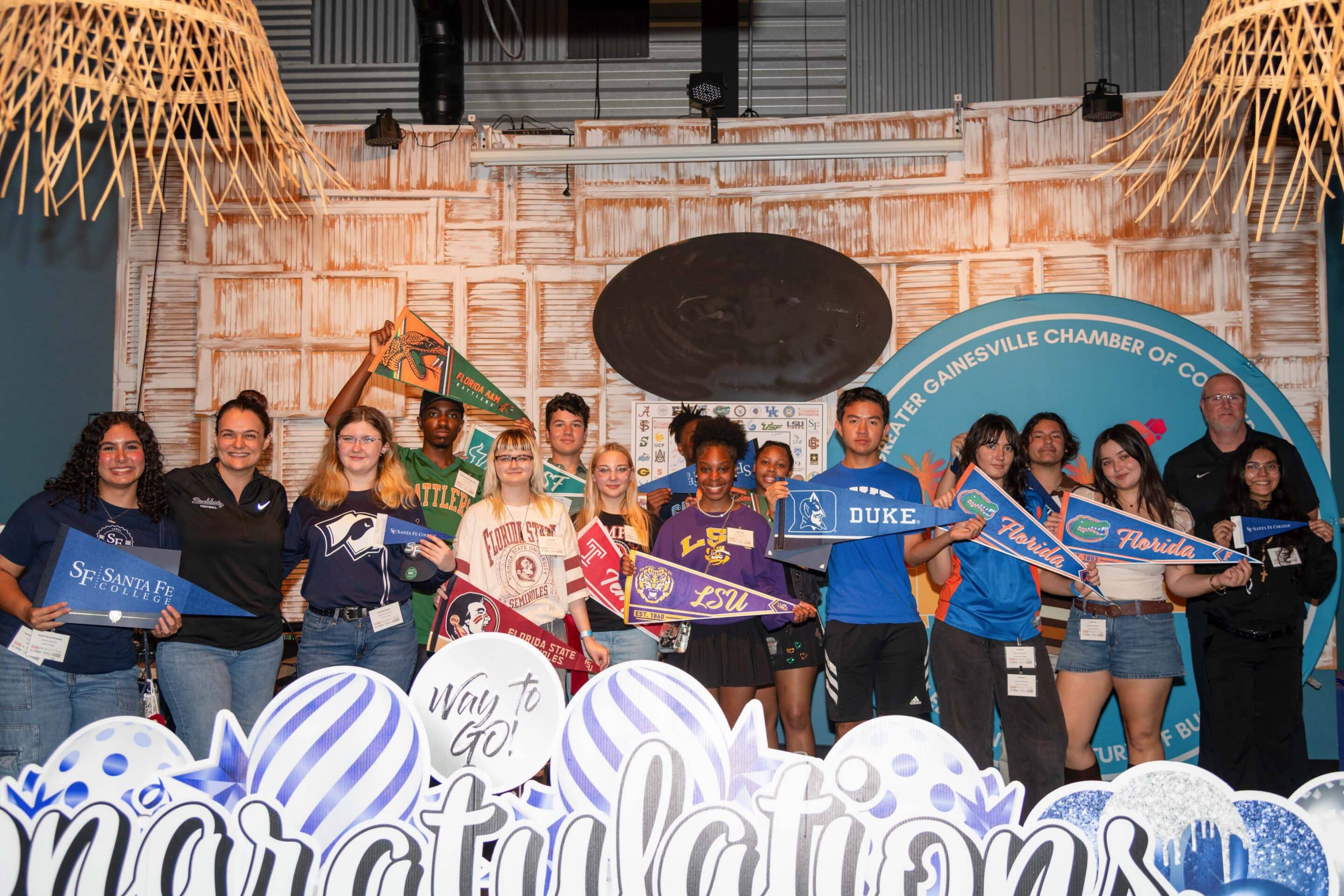 The signing board behind the students bears the logos of dozens of colleges and universities: Florida A&M, Bethune-Cookman, Edward Waters, Tuskegee, Santa Fe College, LSU, UF, and more. Students hold pennants representing their chosen schools. The room is loud. Younger siblings are in attendance. So are grandparents, often in matching shirts.
Ian Fletcher, the chamber’s interim managing director and the driving force behind the Gainesville Local College Access Network, built this event around a simple conviction: celebrating a student’s college decision is community business, not just school business.
“Every one of these students has a whole community that helped get them here,” Fletcher said. “Parents, teachers, coaches, neighbors: this night is for all of them. We want every person in that student’s life to feel the weight of what just happened.”
He makes a point of pulling families onto the stage alongside their students.
“Parents, you belong up here too,” Fletcher told the crowd. “Your student’s success didn’t happen in spite of you. It happened because of you.”
 That breadth is also reflected in who gets celebrated. Florida College Decision Day, coordinated statewide by FCAN, recognizes students heading to four-year universities, two-year colleges, technical schools, and the military.
“We celebrate every path,” Fletcher said. “A student heading to Santa Fe College is making a powerful decision for their future. So is a student enlisting in the military. This night is about honoring the commitment, whatever form it takes.”
Why It Matters: The Research Case
The celebration is not merely symbolic. There is a well-documented phenomenon called summer melt, the pattern by which students who intend to enroll in college, and are often already admitted, simply do not show up in the fall. A December 2026 research brief from Brown University’s Annenberg Institute and the Brookings Institution puts the scale of the problem plainly: nationally, 10 to 20 percent of college-intending graduates fail to enroll, with rates significantly higher among low-income students.
The causes are consistent across populations: confusion about financial aid, unfamiliar administrative tasks like orientation registration and placement tests, and the social and emotional weight of doubt that builds over the summer months when school-year supports have faded and no institution has taken clear responsibility for the student.
 That last category is particularly pronounced for first-generation college-goers. Feelings of uncertainty about whether college is “for them,” fear of leaving home, and the absence of college-going peers can quietly erode a student’s commitment between May and August. The research is also clear on what helps: students are far more likely to follow through when support comes from people and institutions they already know and trust. A national text-messaging campaign studied by researchers had no significant effect on college enrollment overall, but a nearly identical campaign delivered locally in Texas, by counselors students already had relationships with, meaningfully increased enrollment. The relationship is the intervention.
That is exactly what Gainesville’s College Decision Day builds. Pulling the event out of individual schools and into a shared public space signals that a student’s decision to pursue education beyond high school belongs to the whole community.
It is also, according to the research, one of the most effective things a community can do to make sure students actually get there.