
A Powerful Day of Collaboration Points the Way Forward
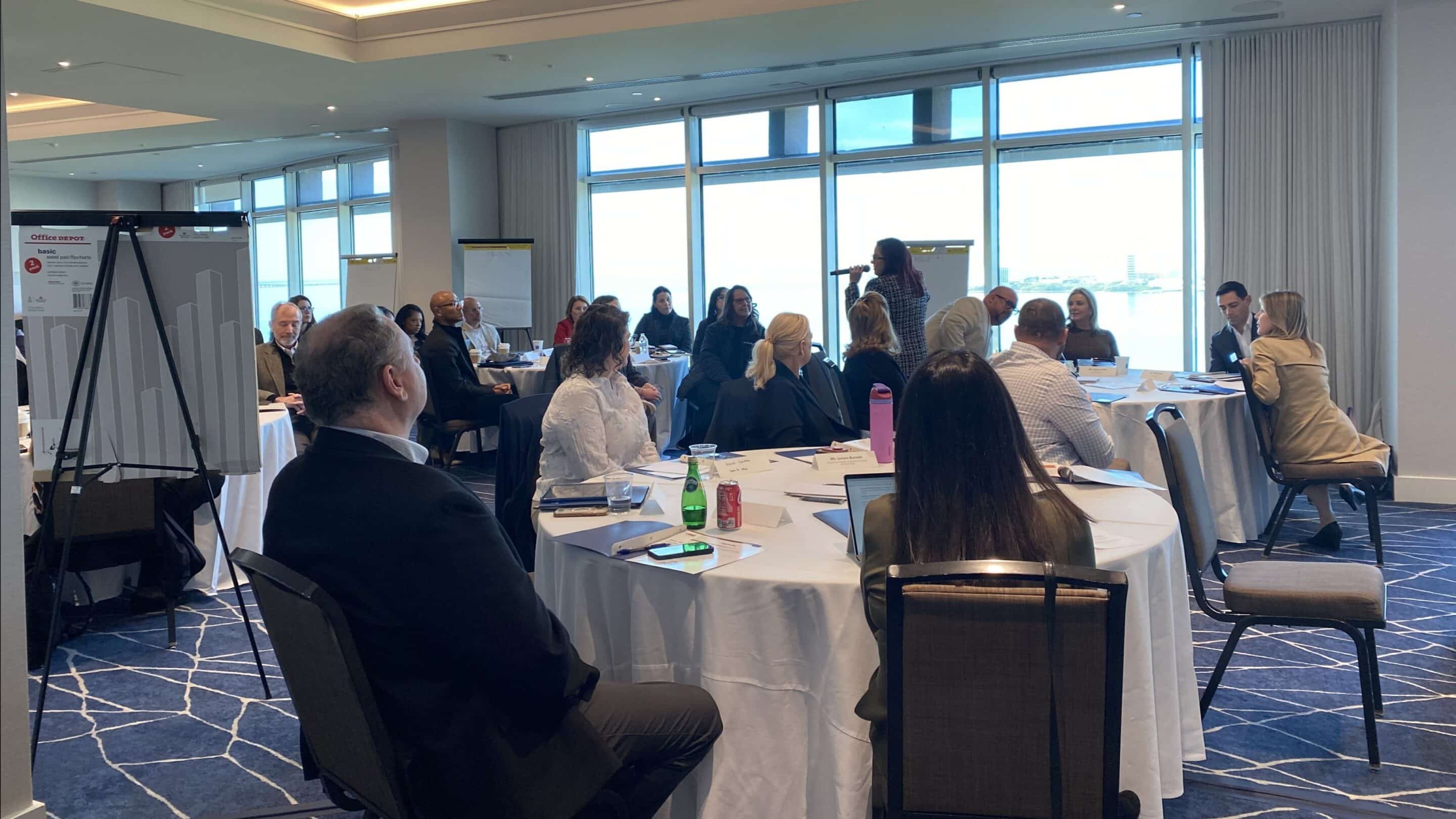
More than 40 education leaders from 22 Florida institutions convened Feb. 3 to develop strategies for supporting students who face financial emergencies during college. The daylong workshop produced near-unanimous agreement that Florida should establish a state-level emergency aid program and identified specific design principles to guide policy development.
“The number one thing that I’ve heard from students is they struggle to pay for expenses outside of those tuition and fees,” said Aleeza Carruthers, president of the Student Senate at Santa Fe College. “They rely on that disbursement to pay rent. They rely on that disbursement to buy food.”
The Florida Emergency Student Aid Workshop brought together financial aid administrators, student affairs leaders, foundation representatives and system officials from community colleges and universities across the state. Participants represented institutions from Pensacola to Miami, providing geographic and institutional diversity in the discussions.
The Scale of the Problem
Florida’s public colleges and universities maintain some of the nation’s lowest tuition rates. But tuition represents only 15 to 30 percent of the total cost of attendance. Students must cover housing, food, transportation, textbooks and childcare costs largely through work, loans or family support.
When unexpected expenses arise, many students lack resources to address them. Research presented at the workshop showed that access to emergency financial aid nationally has declined sharply since federal pandemic relief funds expired. In 2021, 44 percent of students reported receiving some form of emergency assistance. By 2024, that figure had dropped to approximately 7 percent.
Interactive polling revealed strong consensus among participants that financial emergencies commonly derail students’ college plans in Florida. Nearly all respondents indicated that state-level emergency aid would significantly improve graduation rates.
Institutional Results Demonstrate Impact
Two Florida institutions presented data on their existing emergency aid programs, offering practitioner perspectives on what works and what remains difficult.
Florida International University launched its Emergency Aid Program (E-Aid) in 2015 with support from private funders. The university reported that 95 percent of emergency aid recipients either persisted to the next term or graduated. Average awards are $1,000. The program receives roughly 1,000 applications per year, with demand peaking during enrollment periods and around the holidays.
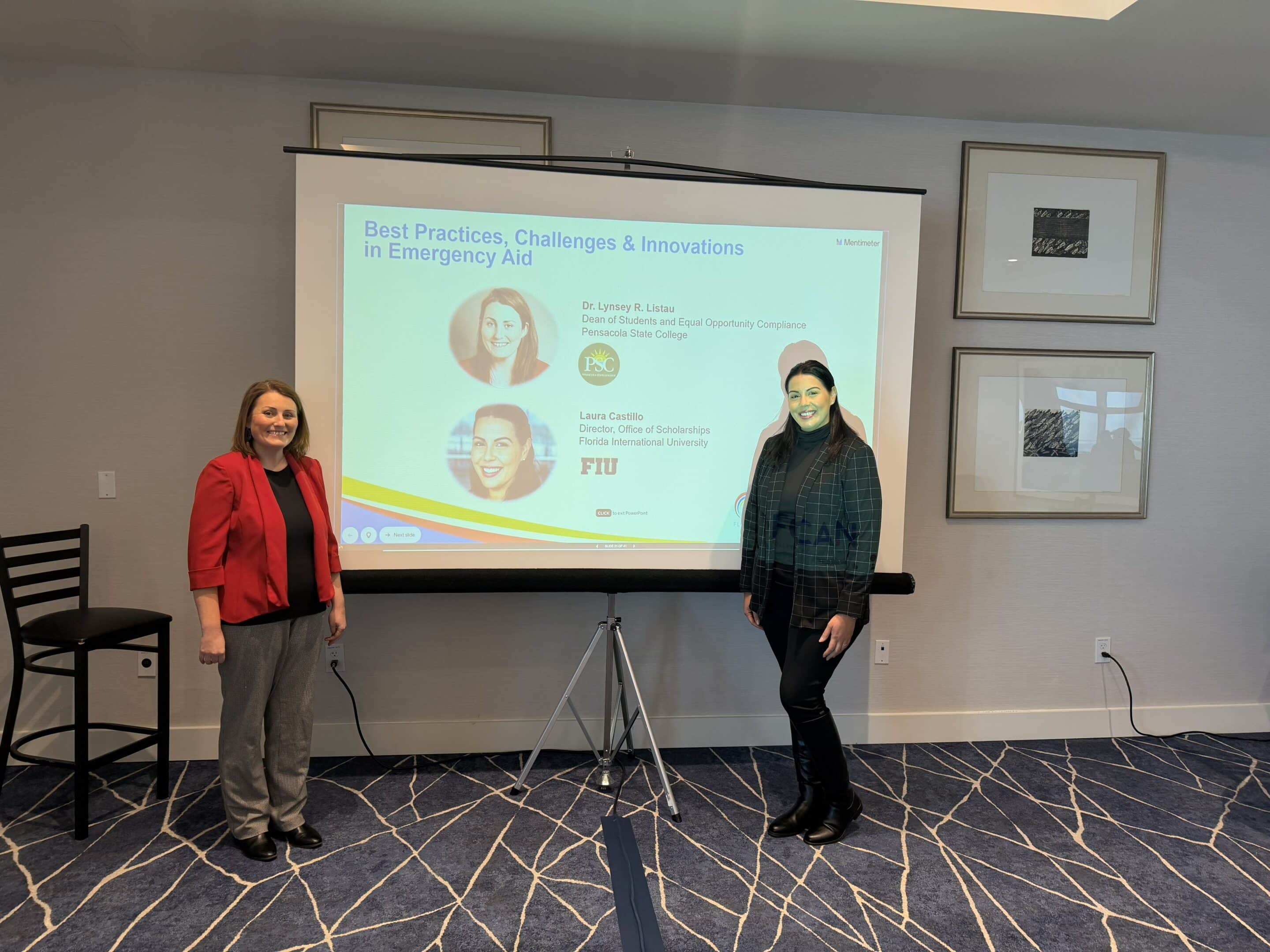 Laura Castillo, the FIU administrator who presented at the workshop, described an intake process built around a holistic review. The program funds about 25 percent of applicants, but staff work to connect every student who applies with some form of support. “We end up as a safety net for all sorts of student issues,” Castillo said.
Since launching in 2022, the Pirates CARE program at Pensacola State College has maintained retention and completion rates above 85 percent for emergency aid recipients. In fall 2024, that figure rose to 96 percent, with students who received emergency aid either completing their programs or continuing enrollment in spring 2025.
Dr. Lynsey Listau, who administers the Pensacola State program, described an approach centered on one-on-one case management.
Both institutions emphasized that emergency aid functions most effectively when integrated with broader student support services, including financial literacy education, benefits screening and case management. They also noted that their programs depend on foundation funding and institutional reallocation of existing resources.
Currently, 30 of Florida’s 70 public and private nonprofit institutions maintain emergency aid programs, according to research conducted by HCM Strategists for the workshop. Programs are more common at larger institutions and in the State University System, where 75 percent of institutions offer emergency aid, compared with 50 percent in the Florida College System.
Emergency aid programs at Florida institutions currently operate on limited and unstable funding. Most rely on institutional foundations, which depend on donor priorities that can shift. Several workshop participants reported that their institutions struggle to meet demand and must limit program availability, award amounts, or both, because of funding constraints.
Design Principles and Program Elements
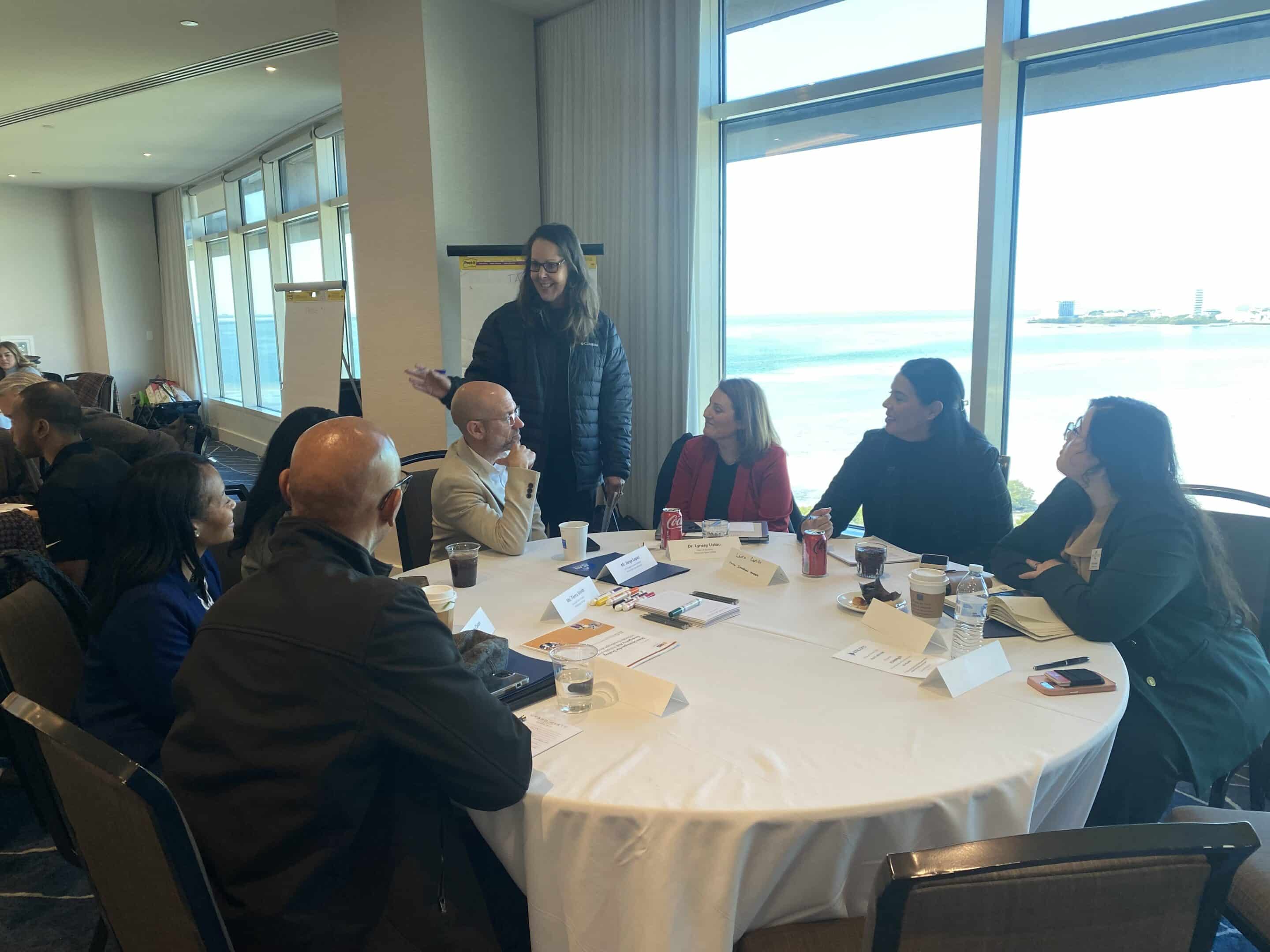
Workshop participants engaged in facilitated discussions addressing program design, funding mechanisms, eligibility criteria and implementation strategies. Several consistent themes emerged across multiple sessions.
- Participants emphasized the importance of institutional flexibility within a state framework. The principle of autonomy with accountability appeared repeatedly in discussions. Institutional leaders said they should establish their own application processes, award amounts and service delivery models, while reporting standardized data to the state on program use and student outcomes.
- Participants strongly opposed restricting eligibility to Pell grant recipients only, arguing that financial emergencies affect students across income levels. “That is missing the majority of the students who need this,” said one participant. “It’s the non-traditional students, the returning students, the students who are part-time, just trying to get through while working, or part-time because they’re disabled.” They also rejected opt-in models that would make state support available only to some institutions.
- Discussions of funding mechanisms explored multiple approaches observed in other states. Options included matching grant programs that leverage institutional or philanthropic contributions, set-asides from existing state financial aid programs, new dedicated appropriations and authorization for institutions to use student fees for emergency aid.
- The group identified several categories of data that a state program should collect: completion rates by term, term-to-term persistence, graduation rates, categories of emergency aid use, demographic characteristics of recipients, amount and frequency of awards and time from application to disbursement. Workshop participants also stressed the value of collecting non-programmatic data, to include student basic needs surveys, to shape state and institutional programs.
State Examples Provide Models
Seven states currently provide dedicated state funding for emergency aid: Wisconsin, Minnesota, North Carolina, Washington, Tennessee, Michigan and California. Virginia allows institutions to designate up to 1 percent of an existing need-based aid program for emergency grants.
 These programs vary in design. Tennessee’s COMPLETE Grants serve Tennessee Promise students and cover five categories of expenses: food, housing, transportation, books and supplies and class-specific fees. Washington’s Student Emergency Assistance Grant prioritizes flexibility and rapid disbursement, requiring colleges to respond to requests within four days. Minnesota’s Emergency Assistance for Postsecondary Students program requires a 25 percent institutional match and targets students experiencing homelessness.
Workshop participants identified Virginia’s approach of authorizing use of existing financial aid as politically feasible in Florida. They also expressed interest in North Carolina’s model, which gives institutions significant discretion in program implementation while maintaining state oversight through reporting requirements.
Measuring Success and Building Evidence
Participants identified workforce development and return on investment as bona fide public purposes for state involvement. Emergency aid functions as a completion strategy that protects existing state investments in students through financial aid, facilities and instruction.
 Data presented at the workshop showed that Florida invested $1.4 billion in state financial aid in fiscal year 2024-25. When students leave before completing credentials because of financial emergencies, that investment produces no return. Emergency aid provides a relatively small intervention that can prevent such losses.
Participants noted that institutions struggle to demonstrate return on investment because many lack systems to track emergency aid recipients longitudinally. A state program could establish reporting requirements and data systems that would generate evidence of impact.
The discussion also addressed the need for qualitative data. Student testimonials and case studies provide context that completion statistics alone cannot convey.
Workshop polling asked participants to complete the phrase “State funds should be used to support emergency aid in order to ____.” The top responses — completion, retention, persistence and workforce — coalesced around a phrase that emerged organically from one table: “live, complete and succeed.”
Next Steps
Looking ahead, FCAN will convene a working group to develop a state policy framework and recommendations on program structure, funding mechanisms, eligibility criteria, institutional requirements and accountability measures.
“The thinking that occurred in this room, the collaborating, the ideas, all of that, we are taking very seriously,” said Braulio Colón, executive director of FCAN. “It will result in the ball going forward on what Florida might do when it comes to expanding access to resources for students.”
READ MORE:
“Emergency aid for college students yields big returns” | Your Turn column published in the Tallahassee Democrat on February 16, 2026